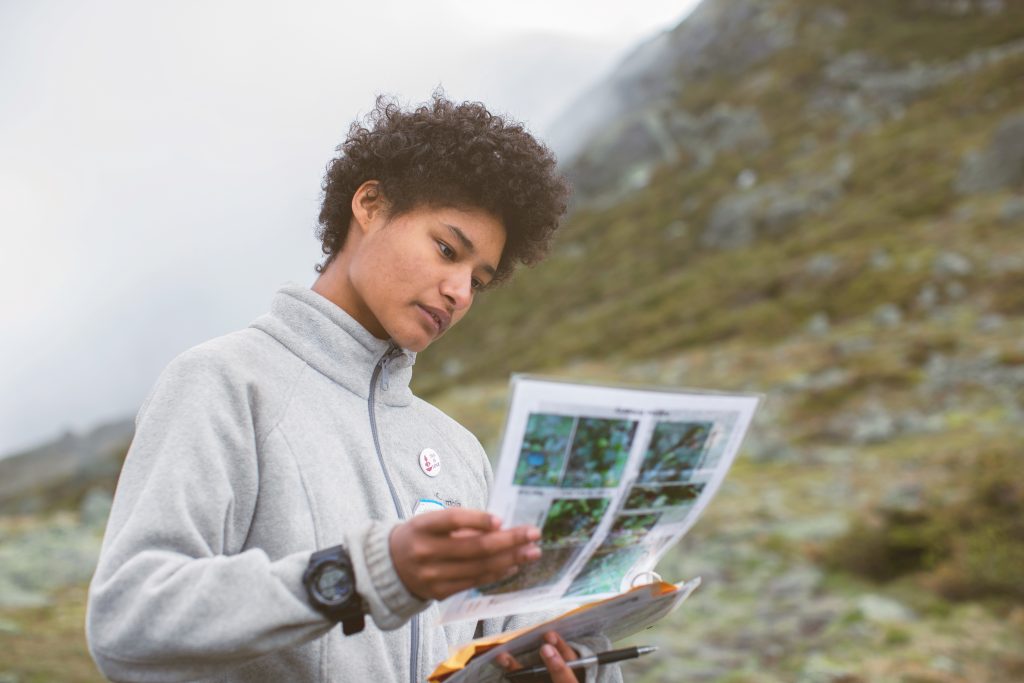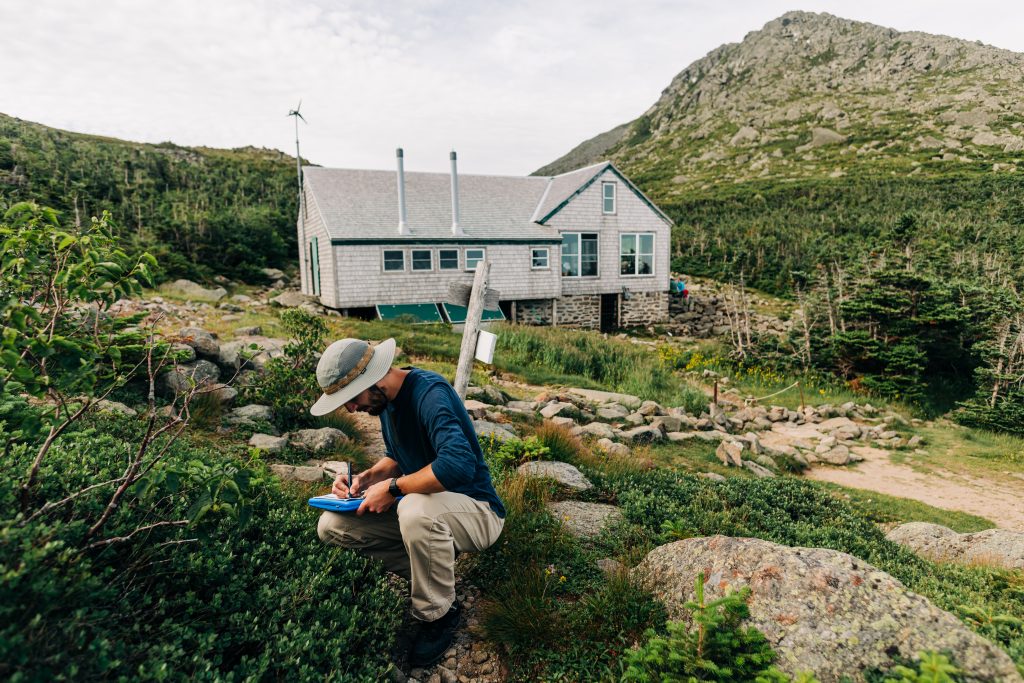
This summer, members of AMC’s research team are out in the field: catching clouds on the top of Mt. Washington, counting pollinators in the alpine zone, and measuring dissolved organic carbon in mountain lakes. Why are these scientists getting muddy collecting data? So you can be outdoors.
For more than four decades, the Appalachian Mountain Club (AMC) has built a robust and well-respected long-term environmental monitoring program in the Northeast. From alpine climate data to water quality sampling, AMC’s dedicated research team produces high-quality, peer-reviewed data and analysis that fuels conservation advocacy and deepens public understanding of how the outdoors is changing—and why that matters for everyone who hikes, paddles, or simply loves green spaces.
Donate to Support Environmental Research
Tracking Change in the Mountains and Beyond
Long-term monitoring means collecting data consistently over extended periods to track trends and detect environmental change. AMC’s research team collaborates with leading universities and agencies to study:
- The timing of plant life cycles (phenology) in the White Mountains and along the Appalachian Trail to detect mismatches in plant and animal activity.
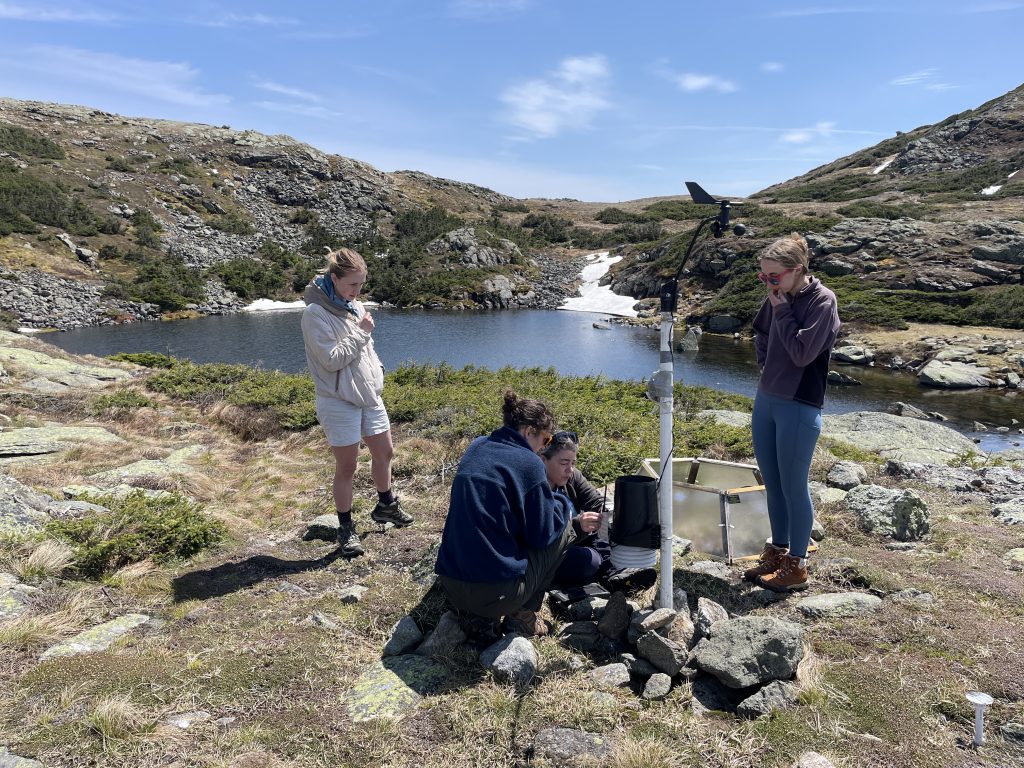
- Weather and climate conditions on Mount Washington, in partnership with the Mount Washington Observatory, as well as across the region to keep hikers prepared
- The recovery of mountain waters from acid rain and assessments of emerging threats to drinking water quality
These studies create critical baselines—reference points that allow scientists to measure environmental progress or setbacks. AMC’s four decades of continuous monitoring represent one of the most comprehensive efforts in the Northeast and provide the evidence we need to protect the places we love. You can’t protect the future of the outdoors without knowing its past and present, and AMC’s research team is a long-trusted source of that information.
“I’m proud to lead the Research team at AMC, which comprises adventurous scientists who are equally adept at collecting observations on top of mountains and rigorously analyzing data back at their desks,” says Sarah Nelson, AMC’s Director of Research. “AMC stewards an unbroken record of climate, plant, water, and air quality observations, which is distinguished in the Northeast—a resource as valuable as the landscapes we study.”
Science That Shapes Policy
AMC’s data don’t just live in spreadsheets. The data are used by policymakers, regulatory agencies, and partner organizations to support stronger air and water quality protections. AMC’s conservation policy team advocates for public policies that address extreme weather events, improve air and water quality, and protect the lands, forests, water, and outdoor recreation opportunities we depend on. Our partners rely on AMC’s long-term monitoring data to demonstrate the link between air pollution and public health, showing how emissions reductions lead to cleaner air and healthier ecosystems.
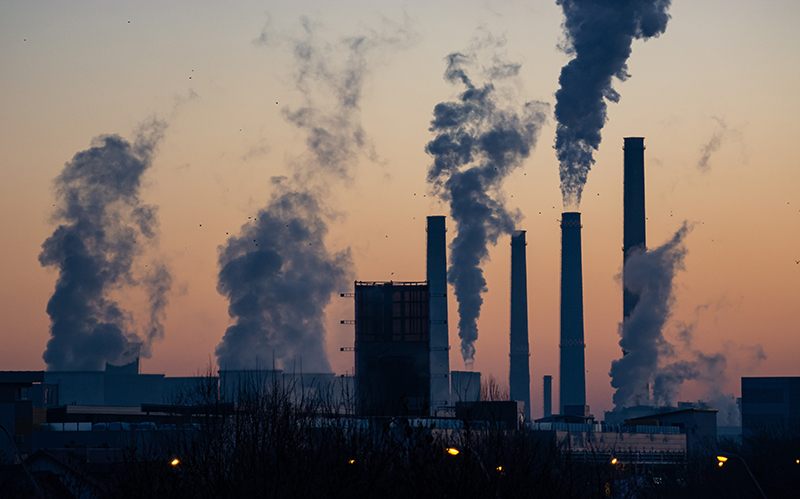
From the Clean Air Act’s acid rain program to today’s climate regulations, science-backed advocacy starts with credible research. Thanks to these policies, we have seen enormous progress. But there’s more work to be done: The smokestacks and tailpipes emitting nitrogen, sulfur, organic toxins, and heavy metals have a measurable negative impact on mountain streams and ponds. When we advocate for cutting these pollutants, we also cut down on the emission of carbon dioxide, the major cause of climate change. It all comes down to keeping a solid record. Long-term monitoring is a climate solution.
Why It Matters Now More Than Ever
Science faces growing threats. In May 2025 President Trump signed an executive order rolling back scientific integrity policies that safeguard research from political interference. Earlier in the year, the federal government proposed to cut scientific funding and laid off thousands of federal scientists.
These changes aren’t about reducing the national deficit or saving taxpayers money. These reductions would eviscerate research and make it impossible to establish environmental baselines and track trends in climate change. If the federal government divests from scientific research, it’s even more crucial for non-governmental organizations like AMC to keep sending researchers out into the field to record observations and keep long-term data records intact.
AMC remains committed to tracking climate change as it happens, identifying what environmental regulations are needed, and advocating for federal and state regulations that protect the well-being of people and the outdoors. We are uniquely positioned to leverage our on-the-ground scientific expertise across federal and state policy arenas, highlighting critical impacts of policies on the health of people in the outdoors and the ecosystems we all rely upon. When progress rolls back, AMC steps forward.
“Conservation policy is at a critical crossroads, with mounting threats to the safety and well-being of people in the outdoors and to the natural resources we cherish,” says Mandy Warner, AMC’s Senior Director of Policy. “AMC’s world-class scientific research team is providing critical research that guides and underpins our policy advocacy work and shines a spotlight on the most urgent issues we need decisionmakers to address.”

Join the Monitoring Movement
You don’t need a PhD to help collect environmental data. Through AMC’s community science programs, you can contribute to observations that support climate and ecosystem research:
- Spring and Summer: Join our plant phenology projects along the Appalachian Trail and in the Maine Woods on iNaturalist
- Winter: Report snow depth to track warming winters
- Year-round: Share your nature sightings to build a richer understanding of regional change and stay informed on climate policies and actions you can take by joining our Conservation Action Network
Protecting the outdoors starts with knowing what’s changing. Whether you’re snapping a photo of a blooming trillium or measuring snowpack, your contribution matters.
Support Science-Backed Conservation
Want to do even more? Your gift to AMC’s Annual Fund ensures that we have the best available data and expertise to ensure that future generations can enjoy the outdoors as we do today. Make a donation to keep science and nature connected.