


Do you remember October 10th, 2024, when much of the sky over the Northeast came alive with shimmering curtains of pink, red, and green? One minute I was taking the recycling out, and the next—bam. I remember sprinting down the street to the nearest park, where I stood shoulder to shoulder with my neighbors in the grass, my toes slowly going numb, gasping at the sky.
Seeing the northern lights, or aurora borealis, is an experience of a lifetime. (Try to keep your jaw from dropping, I dare you.) And if you’ve never seen them, you’re about to get the chance: September through December 2025 is the time to keep your eye on the skies.
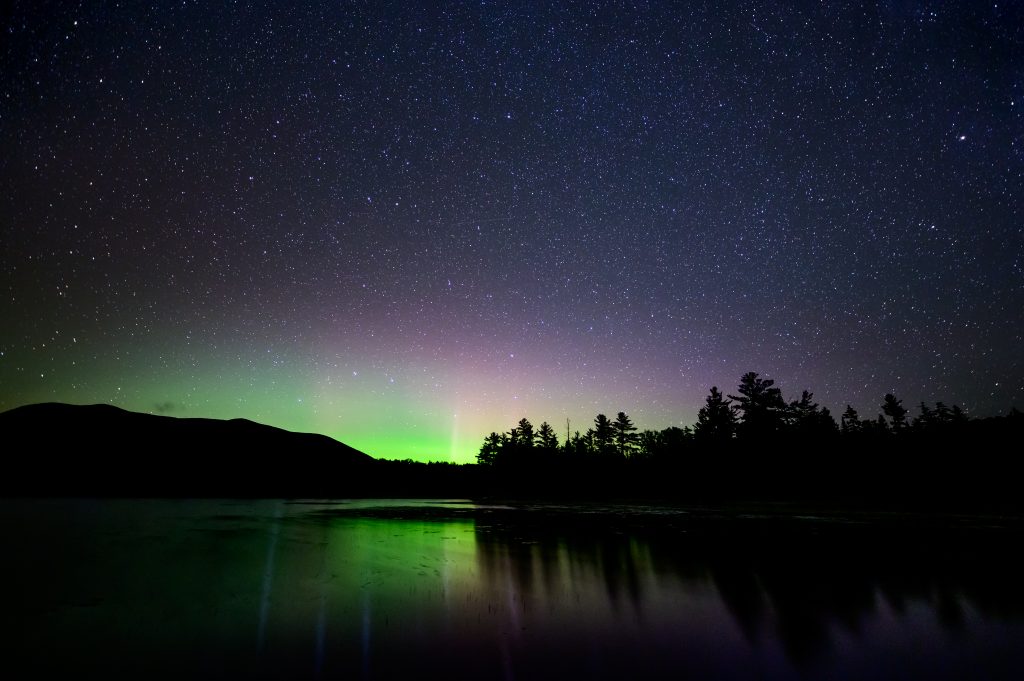
Where to Watch the Northern Lights in the East
This fall, according to NASA and the National Oceanic and Atmospheric Association (NOAA), the Sun will be reaching what scientists call the solar maximum—the peak of an 11-year cycle of activity, with more solar flares and geomagnetic storms than usual—which means brighter auroras that stretch farther south. People throughout AMC’s region—not just Alaska or Canada—have a real shot at witnessing the northern lights close to home.
Your best chance of spotting the aurora in the Eastern U.S. is to head for dark skies, northern latitudes, and higher elevations. Here are some of the best places for viewing the night sky across AMC’s region:
Maine
AMC’s Maine Lodges, located just southwest of Maine’s Baxter State Park, sit under one of the darkest skies east of the Mississippi. The lodges are in the AMC Maine Woods International Dark Sky Park, the first and only International Dark Sky Park in New England.
For a slightly shorter drive for most, Rob Burgess, president of the Southern Maine Astronomers, recommends visiting Bradbury Mountain State Park in Pownal, Maine. This park is easily accessible from the state’s population center—less than half an hour’s drive up Route 295 from Portland—and features campsites and a prime lookout for stargazing.
New Hampshire
The White Mountains, especially around Mount Washington, are prime aurora territory. Visit AMC Highland Center or AMC Pinkham Notch Visitor Center for a front-row seat to the night sky.
Massachusetts
Wachusett Mountain State Reservation in central Massachusetts is about an hour’s drive from Boston and is unaffected by the city’s light pollution. For even darker skies, keep heading west along Route 2 and south on Route 32 to the Petersham State Forest.
Mid-Atlantic
Though it’s just a four-and-a-half hour drive from Philadelphia or New York City, Cherry Springs State Park in north-central Pennsylvania is one of the few IDA Dark Sky Parks in the Northeast and offers another ideal location for stargazing.
Just east of Shenandoah National Park, Rappahannock County Park, roughly a 90-minute drive from Washington, D.C., is another certified IDA Dark Sky Park.
If a dark sky area isn’t accessible, simply look for a field or other open space where trees won’t obstruct your view.
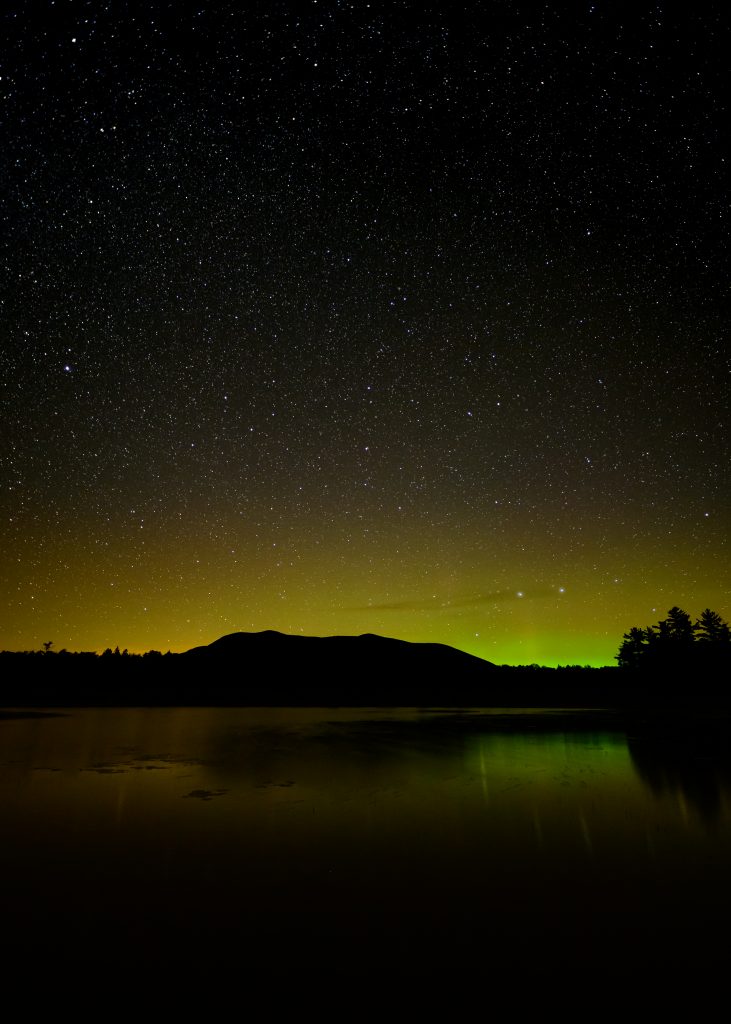
Tips for Viewing the Aurora in 2025
Catching the northern lights takes some planning—and a little luck. Aside from posting up with a camera under the darkest sky possible, here’s how you can improve your odds:
- Check the Aurora Forecast: Websites like NOAA’s Space Weather Prediction Center or apps such as Aurora Alerts can help you track geomagnetic storms. Look for a Kp Index of 5 or higher.
- Time It Right: The best viewing window is usually between midnight and 2 a.m., though strong storms can light up the sky as early as dusk.
- Pay attention to the moon: A full moon can wash out faint auroras, so aim for nights with little to no moonlight.
- Bring the right gear: For the best chance of spotting an aurora, prepare to be out there awhile. Dress warmly, pack a headlamp with a red light setting, and bring a tripod if you want to capture photos.
- Use your camera or smartphone to spot hidden auroras: Sometimes the aurora is too faint for the naked eye, but it shows up in photos. Take a quick test shot facing north with your phone or camera. If you catch a faint green glow on the horizon, stick around—auroras can brighten rapidly, and sudden substorms may turn a subtle glow into a dazzling display.
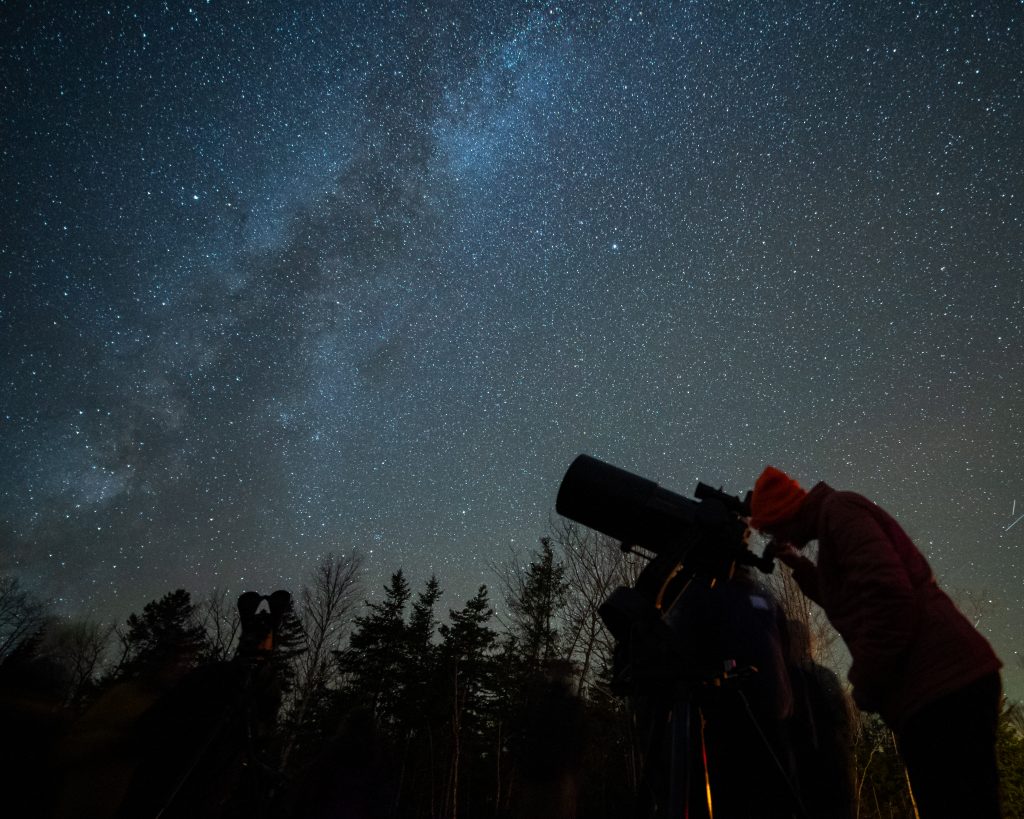
Don’t Miss These Major Celestial Events in Fall 2025
While the northern lights are certainly worth watching for, they’re not the only reason to keep your face tilted toward the heavens. Courtesy of Space and the Farmer’s Almanac, here are some of fall 2025’s most notable celestial moments:
September 7 – Full Moon. (Also known as the “Corn Moon.”) Skywatchers in Asia, Europe, Africa, and Australia will see a dramatic total lunar eclipse.
September 19 — Moon–Venus–Regulus Conjunction. Look east before sunrise to see a stunning triangle: a crescent Moon, Venus, and bright star Regulus nearly aligned in the sky.
September 21 — New Moon + Saturn, which will be at its closest and brightest all year, with rings viewable through a telescope.
October 6 – Full Moon. Also known as the “Harvest Moon.”
October 8–9 — Draconid Meteor Shower. This lesser-known meteor shower peaks shortly after sunset. In 2025, the rising Moon arrives later, offering good dark-sky conditions for spotting up to ~10 meteors/hour.
October 21-22 – Orionids Meteor Shower. Set an alarm and look to the northeast from 2:00-4:00AM to watch this swiftly-streaking meteor shower, which appears on the tails of a new moon. 15-25 meteors/hour.
November 4-5 – South Taurids Meteor Shower. Slow and bright, appearing in the south from 1:00-3:00AM. 10-20 meteors/hour.
November 5 – Full Moon. Also known as the “Beaver Moon.”
November 12-14 – North Taurids Meteor Shower. Slow fireballs appearing in the south from 12:00-2:00AM. 10-20 meteors/hour.
November 17-18 – Leonids Meteor Shower. Swift streaks appearing in the southeast from 4:00-5:00AM. 10-15 meteors/ hour.
December 4 – Full Moon (Supermoon). Also known as the “Cold Moon,” this full moon will appear about 8% larger and 15% brighter than usual.
December 13-14 – Geminids Meteor Shower. widely regarded as one of the best meteor showers of the year, will peak between 2:00-5:00AM with up to 150 bright, colorful meteors per hour.
December 22-23 – Ursids Meteor Shower. A minor meteor shower with 5–10 meteors per hour that benefits from a nearly new moon, making for all-night visibility in northern latitude.
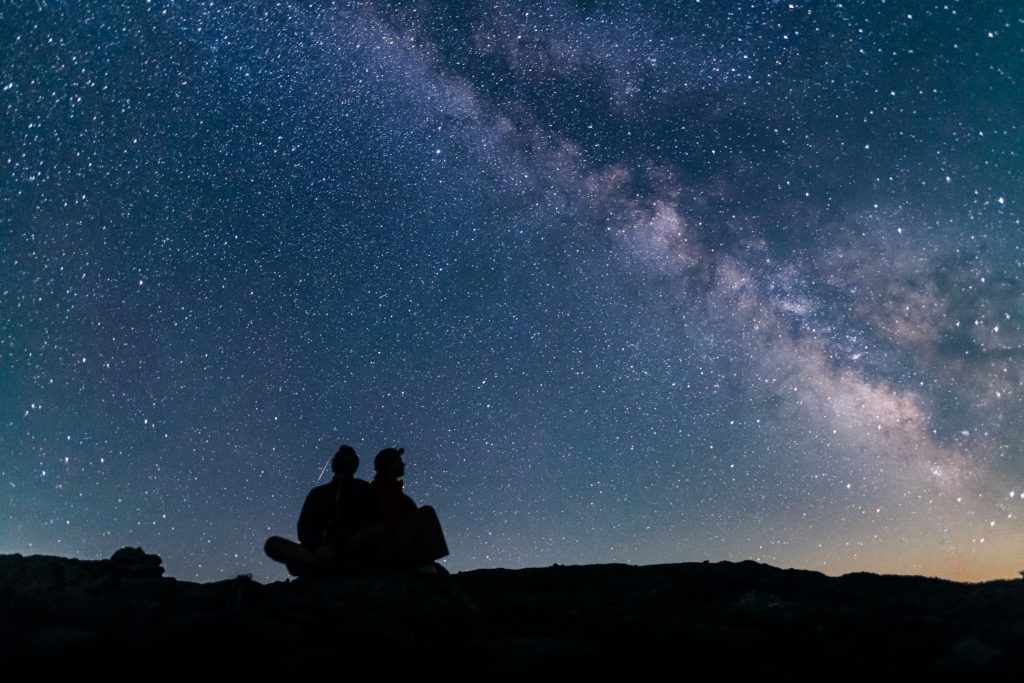
Why Dark Skies Matter
AMC’s commitment to protecting the night sky goes far beyond fostering memorable stargazing experiences. As a leading advocate for dark skies in Maine, AMC championed a new law establishing biannual Dark Sky Weeks and advanced critical bipartisan legislation to reduce light pollution—an urgent issue affecting both people and the natural world. Artificial light disrupts wildlife migration, breeding, and pollination, while also impacting human health, from poor sleep to increased risk of hormonal cancers. By reducing light pollution, we not only safeguard ecosystems but also ensure that communities can experience the beauty of star-filled skies for generations to come.
See the Dark with AMC
See The Dark is AMC’s celebration of the night sky and your invitation to experience the wonder above while helping protect it for generations to come. Held in some of the best stargazing locations in the Northeast, each event blends astronomy, nature, and creativity to connect people with the stars and raise awareness about light pollution.
Join an AMC See the Dark Event This Fall
