


What does it take to protect one of the most breathtaking—and most popular—trails in the Northeast? Head out for a hike on the Franconia Ridge Loop and you might catch AMC’s professional trail crew splitting rocks, hauling generators, and setting stairs. It may seem like just another day in the life of a trail crew, but the five-year restoration of this iconic alpine route is more than a construction project—it’s an opportunity to innovate new trail solutions and share next-level trade skills that are elevating the northeastern trails community.
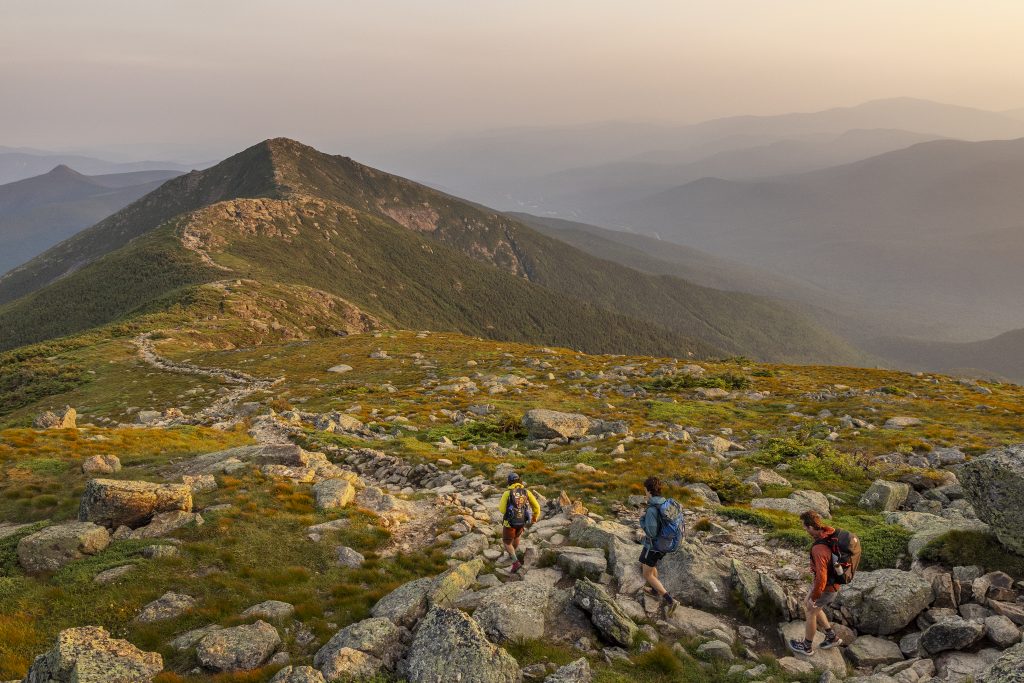
The Franconia Ridge Trail – a segment of the Appalachian Trail – traverses the peaks of two 4,000-footers in the White Mountain National Forest, Mt. Lafayette and Mt. Lincoln, as well as North Lincoln and Little Haystack Mountain. Originally built between 1826 and 1958, the loop comprises the Franconia Ridge Trail, the Falling Waters Trail, the Greenleaf Trail, and Old Bridle Path, from which hikers can access AMC’s Greenleaf Hut. National Geographic has ranked this loop as one of the top 20 hikes in the world, and for good reason: the 8.9-mile trek offers hikers some of the most breathtaking views of the White Mountains. Just over two hours from Boston, it’s one of the most popular trails in New England, receiving up to 1,000 hikers a day during peak season.
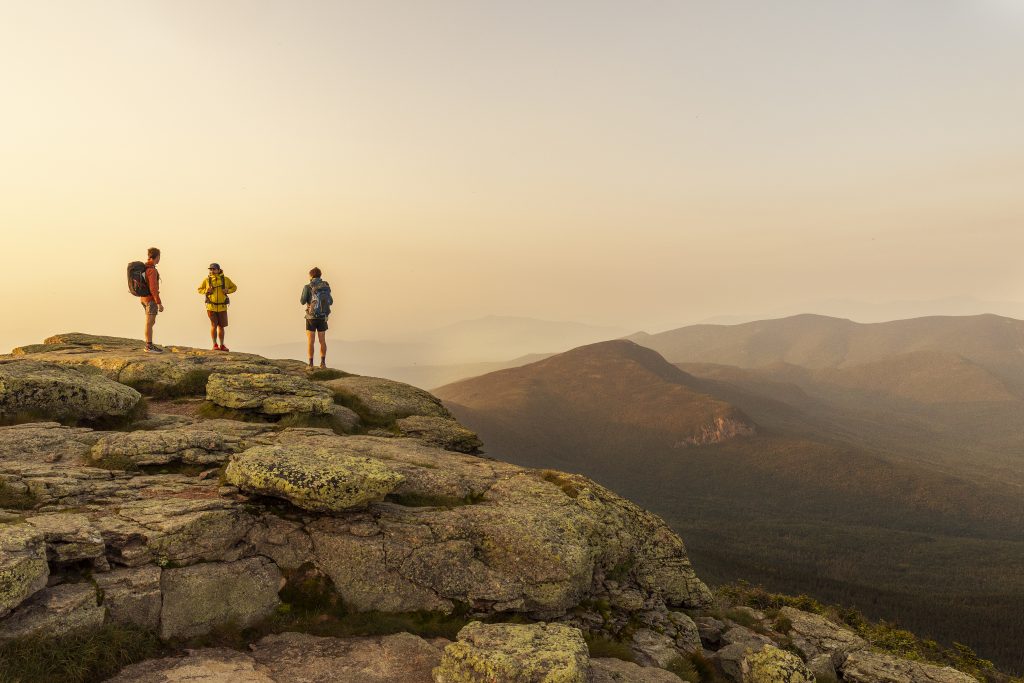
But a well-loved trail often makes for an eroded trail. “These are old legacy trails with unsustainable alignments that are getting hammered by high usage and the increasing frequency and severity of weather events,” says Matt Moore, Senior Operations Manager for AMC Trails. Over time, Moore says, foot traffic and water erosion has turned the trail into a five-foot-deep gully. “We’re losing soil, and no matter how many drainage structures we install, that trail is bound on a trajectory towards failure. So this hardening prescription is meant to be sustainable and durable.”
Why is restoring this trail such a big deal? The White Mountains are home to the third largest connected area of alpine tundra in the eastern United States, and the Franconia Ridge Trail traverses fragile alpine habitat. When a trail becomes difficult to walk on, people find their own way around, trampling plants and widening the human footprint. Well-maintained trails are one of our most effective conservation tools.
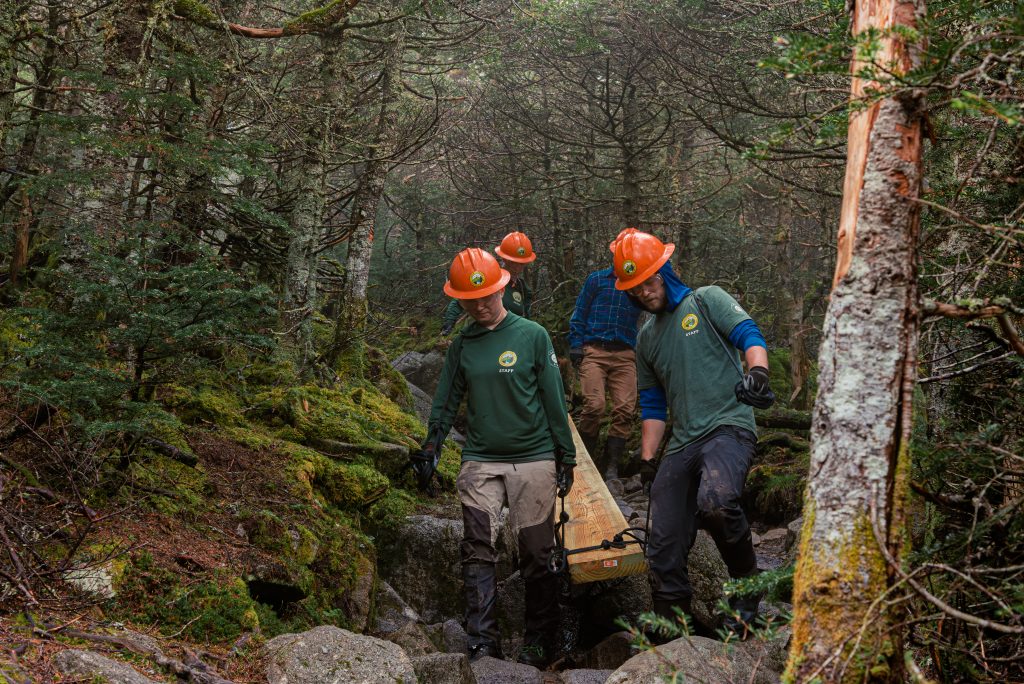
The restoration project is in year four of a five-year endeavor supported by a multi-million dollar federal budget appropriation secured by Senator Jeanne Shaheen of New Hampshire. Under the direction of the White Mountain National Forest, AMC is leading the work in partnership with professional trail contractors, volunteers, and organizations such as AmeriCorps, Off the Beaten Path Trailworks LLC, Northwoods Stewardship Center, Vermont Youth Conservation Corps, the Student Conservation Association, and the U.S. Forest Service.
“This extraordinary funding opportunity has allowed us to try to build skills within our broader northeastern trail community,” Moore says, citing the addition of new tools and the technical masonry skills needed to execute these improvements. “At every step of the process, there’s a higher degree of skill than our crews have traditionally had. This has been an incredible opportunity for us to learn from professional trail workers with cumulative decades of experience.”
The end goal? A resilient and inviting trail that will support hikers for many years to come.
“We can’t expect people to make an active decision to make their footsteps more sustainable. We want our trail to be the path of least resistance,” Moore says. Trail innovation has come a long way since the 1800s, with trail crews adapting to human behavior. In this case, AMC is creating strategic trail alignments that follow more durable paths and building smaller, carefully crafted steps that encourage people to stay on the trail. “When you’re in the moment, you’re hiking, you’re tired,” Matt says. “Our feet are just going to go where our feet are going to go. And we want people’s feet to go on the work that we build.”
Show Your Love for the Franconia Ridge
Support the crews who restored the trail with a Restore the Ridge t-shirt produced by New Hampshire’s own Burgeon Co., or bring the trail home with a replica Franconia Ridge Trail Loop sign. Proceeds support the AMC Trail Crew who made this restoration possible.