


It’s pouring down rain in the White Mountains, but the trail workers at Camp Dodge don’t seem to mind. In fact, as they chisel away at rocks and inspect trails for accessibility, most of them don’t even seem to notice. AMC’s Trails Program is the oldest and one of the most distinguished trail operations in the Northeast, and this weekend upwards of a hundred people have gathered at Trail Skills College—AMC’s training program that provides accessible opportunities for skill development, mentorship, networking, and capacity building to support the region’s diverse trail community.
I’m here to meet the folks who brave all kinds of weather to build and maintain the trails I love, and to understand what pulls them to the work they do. When the sun is scorching and the bugs are biting; when it’s dumping buckets of rain like it is today, what keeps a trail crew going? What’s in it for the people who choose to spend their time out in the elements toiling with rocks and tools and downed branches? And for those who end up staying beyond the season, or who return year after year—what makes a trail job a life?
The people around me are dressed in layers of fleece, flannel, and sun hoodies. They’ve brought two pairs of pants to Trail Skills College—one for the work, and a slightly less dirty one for the evening’s festivities. These pants have pockets on pockets that are filled with ear protection, eye protection, waterproof notebooks, pens, p-cord, utility knives, and god knows what else. It’s like they’re wearing the toolshed. I can’t wait to see how they’re going to use it all.
With bright orange hard hats, we set off into the woods.
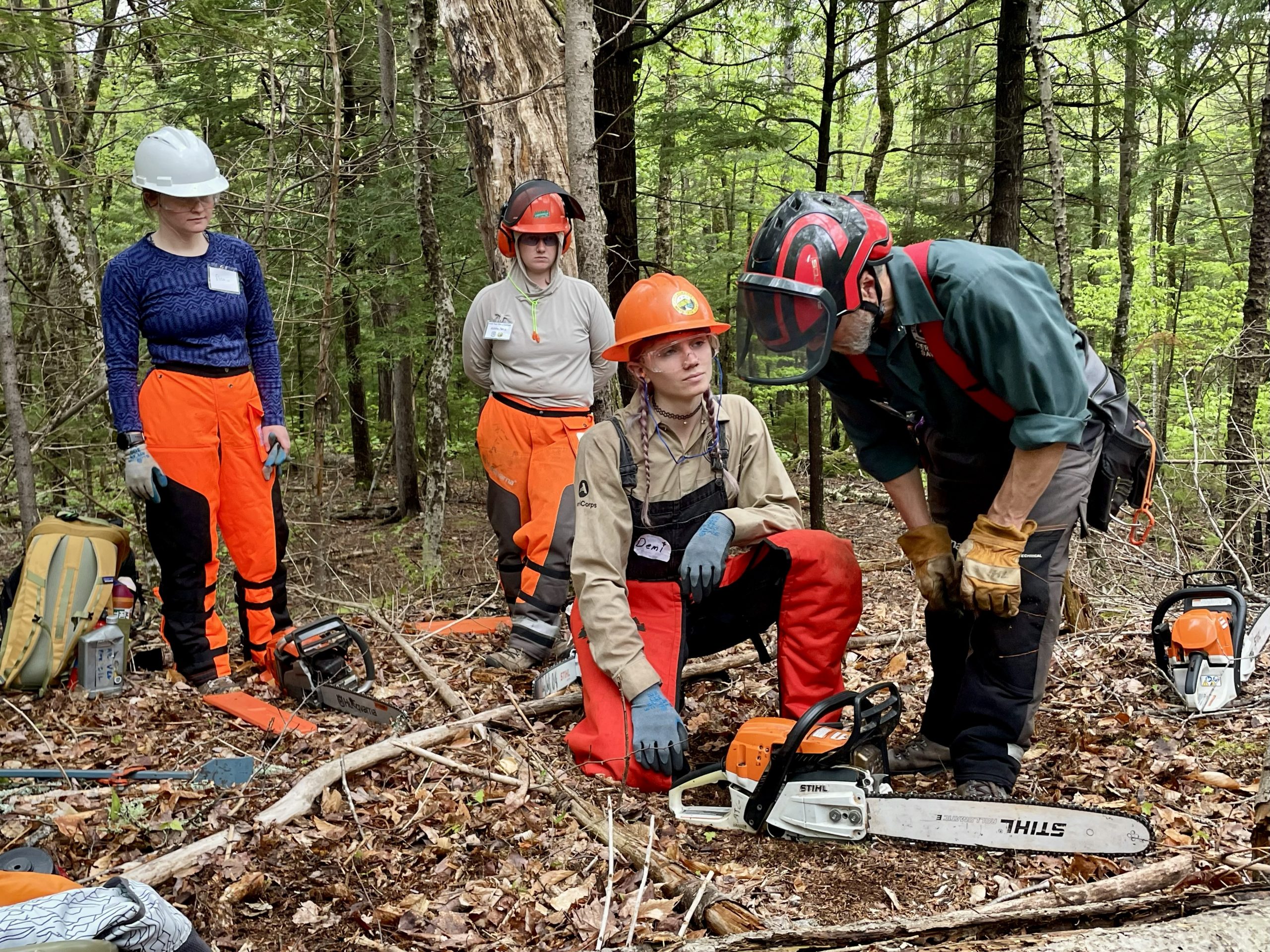
First up are the chainsaws. The trail workers stand in a circle wearing bright orange chaps and protective glasses as the student in the middle, carefully supervised, rips the cord and her chainsaw roars to life. Farther up the trail they’re knee-deep in mud doing something called “rock work,” which consists of sliding boulders into steps and propping them up at just the right angle with gravel that they’ve hand-crushed with a hammer. Across the Peabody River an instructor has rigged a pulley system between trees and his students are cranking on a lever and flying huge boulders through the woods.
In each course I visit, I can feel their focus thickening the air around us. I could cut it with a utility knife, if I had one. They’re eager to put their hands on things, to get to work. They’re here to learn.
There are renowned trail builders at Trail Skills College—Peter Jensen, Erin Amadon, Jed Talbot. There are representatives from the White Mountain National Forest, and Wabanaki speaker John Neptune is giving a presentation on living communally with nature. Sprinkled into the mix are AMC Trail Crew members with years of experience with ax chopping, evaluating trails for repairs, running volunteer days, and building accessible trails. Everyone is generous with what they know.
(Want to attend a training yourself? Check out AMC’s Trail Training Programs to sign up for the next one.)
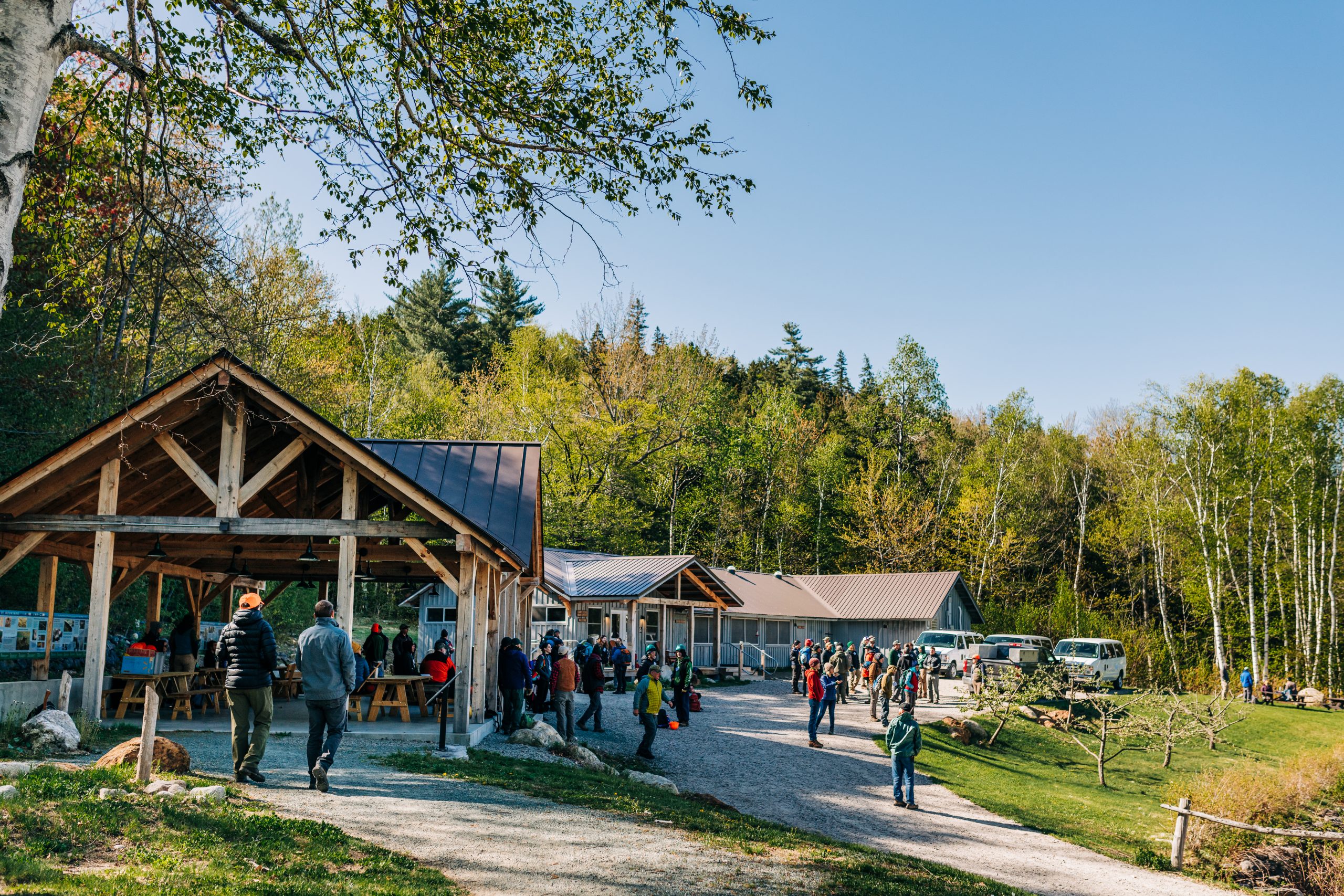
In the evening, the Camp Dodge staff serves some of the best food I’ve ever had in a dining hall—enchiladas with fresh salad and local ice cream for dessert—and trail workers from across the Northeast sit scattered across the deck and pavilion and connect as a community. One person I talk to met his life partner at Camp Dodge. Another tells me their experience on AMC’s Professional Trail Crew has laid the foundation for the rest of their life. Indeed, over the course of the weekend when I ask people what they love about trail work, the answers vary—the good people, the variety, the opportunity to work outside, a deep sense of place and belonging, the act of giving back—but to a person, the impact this work and community has had on them is clear.
“I really love the chance to get people outside more, and also to share in the responsibility of stewarding our land and our trails,” says AMC Trails Volunteer Crew Leader Jennifer Passios. “I think that a lot of the times when we hike we gain an appreciation for what’s above us, and a lot of trail work involves an appreciation for what’s below us and around us as well.”
Field Supervisor Giselle Aoun puts it most simply: “I like to dig holes.”
Keep this work alive with a year-end donation to AMC
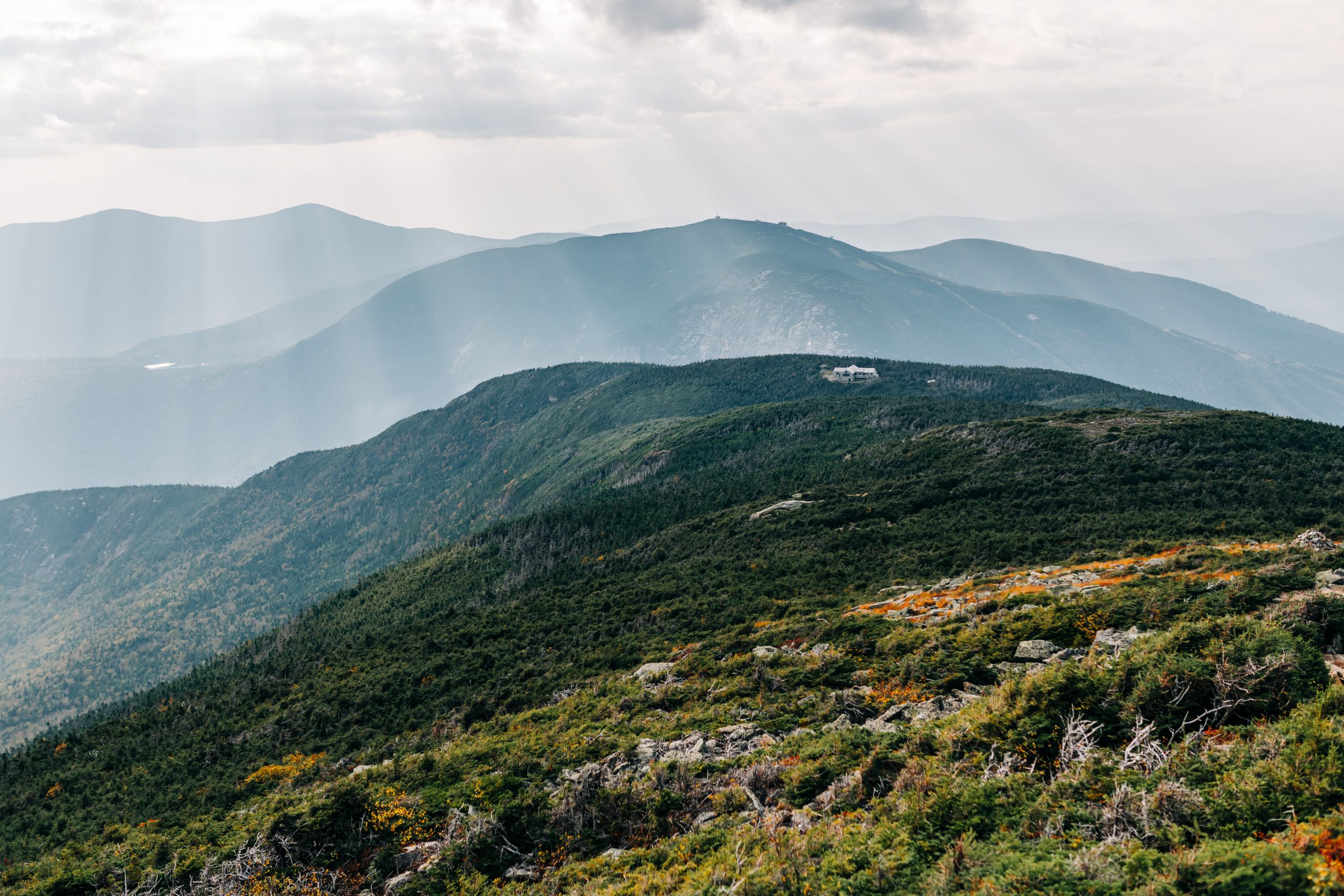
Fast forward to August. Trail Skills College is in the rearview mirror, and I’ve come back to the White Mountains to check out the work AMC’s Professional Trail Crew and their partners across the Northeast have been doing to restore the famous Franconia Ridge Loop. Together, they’re creating strategic trail alignments that follow more durable paths and building smaller, carefully crafted steps that encourage people to stay on the trail. “People will just go where they want to go,” AMC Senior Operations Manager Matt Moore says. “You can’t stop them—so you make the right way enticing.”
As I climb down from the ridge this muggy August day, my feet stepping easily down newly-built stone steps, I’m thinking of how trail work is a form of conservation, how keeping people on the right path protects the places we love so that we do not love them to their detriment. I remember what Wabanaki speaker John Neptune said to the crowded Camp Dodge dining hall at Trail Skills College: “We need to shift so that we have a right to manage our natural resources becomes we have a responsibility to care for our natural relationships.”
Maybe the answer to my question about what brings people to this work is actually quite simple. It’s about what you give as much as what you get. To come home each day spent and sweaty and satisfied, having worked in the company of friends. To know every secret swimming hole in a ten-mile radius of Camp Dodge. To live in touch with the changing seasons. To dedicate oneself to work that endures elements, years, and lifetimes. And to build a life of connection—one conversation, one boulder at a time, hands in the dirt.
Conservation work across the country has been stalled, with underfunded public lands under threat. Supporting trail crew work and AMC’s advocacy for the outdoors is a tangible way to care for and protect the places you love.