


At work, AMC director of trails Alex DeLucia demonstrates how to safely wield dangerous equipment; chainsaws and bowsaws, pickaxes and Pulaskis. On his days off, he trades power tools for a bow and arrow and returns to the woods in pursuit of deer.
DeLucia isn’t alone. There are about 15 million licensed hunters in the United States, 73,000 in DeLucia’s home state of New Hampshire. Their biggest season is late autumn, when white-tailed bucks cover great distances in hopes of attracting a mate. It also happens to coincide with fall foliage, the most popular time of year to hike in New England.
Ultimately, hunting season shouldn’t deter you from exploring outdoors. Cases of hunters accidently shooting someone else are relatively rare —just 55 reported instances nationwide last year, mostly involving members of a hunting party. But recreating during this time of year does require planning. DeLucia—always focused on safety—had some advice:
Wear blaze orange
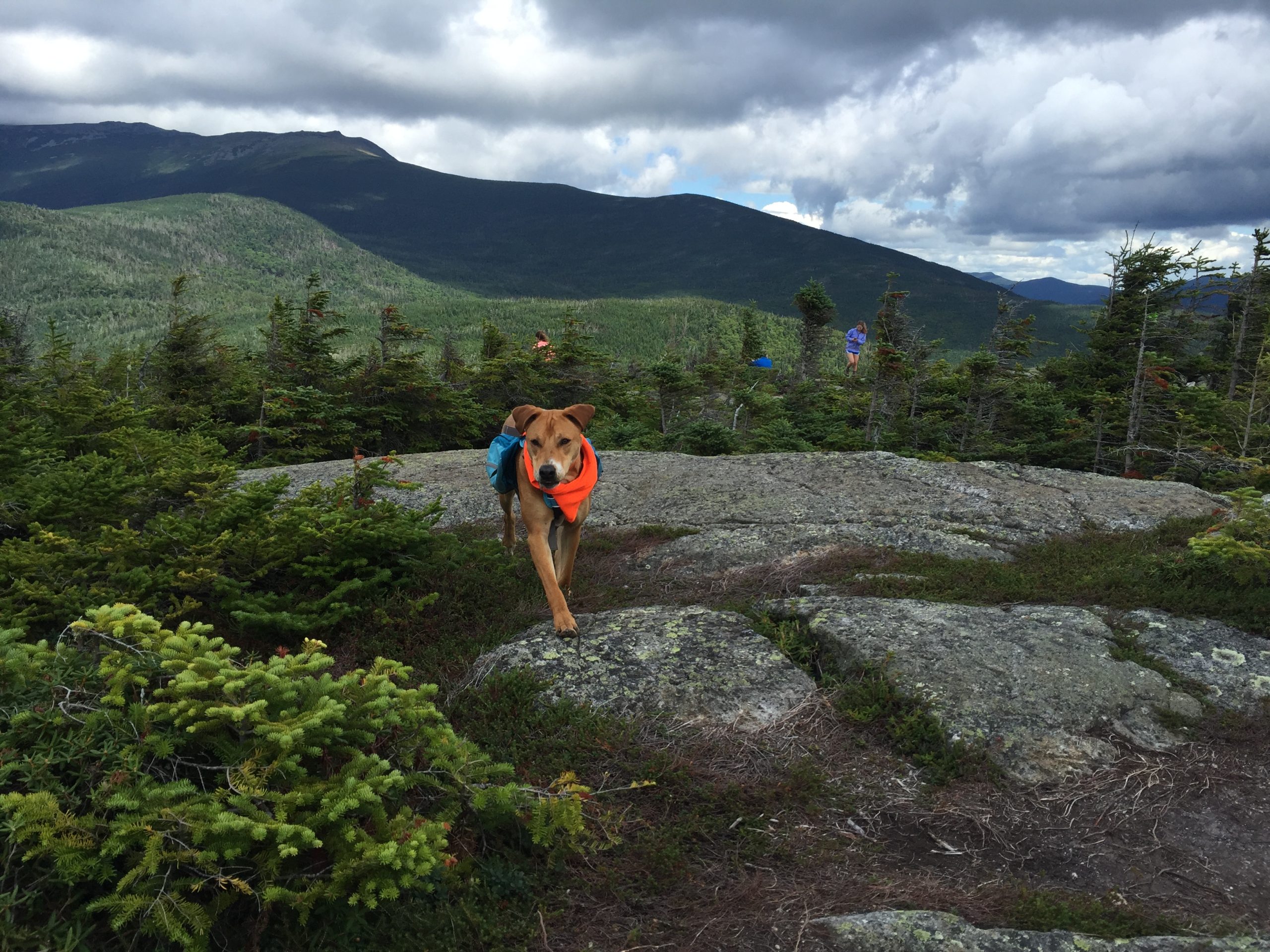
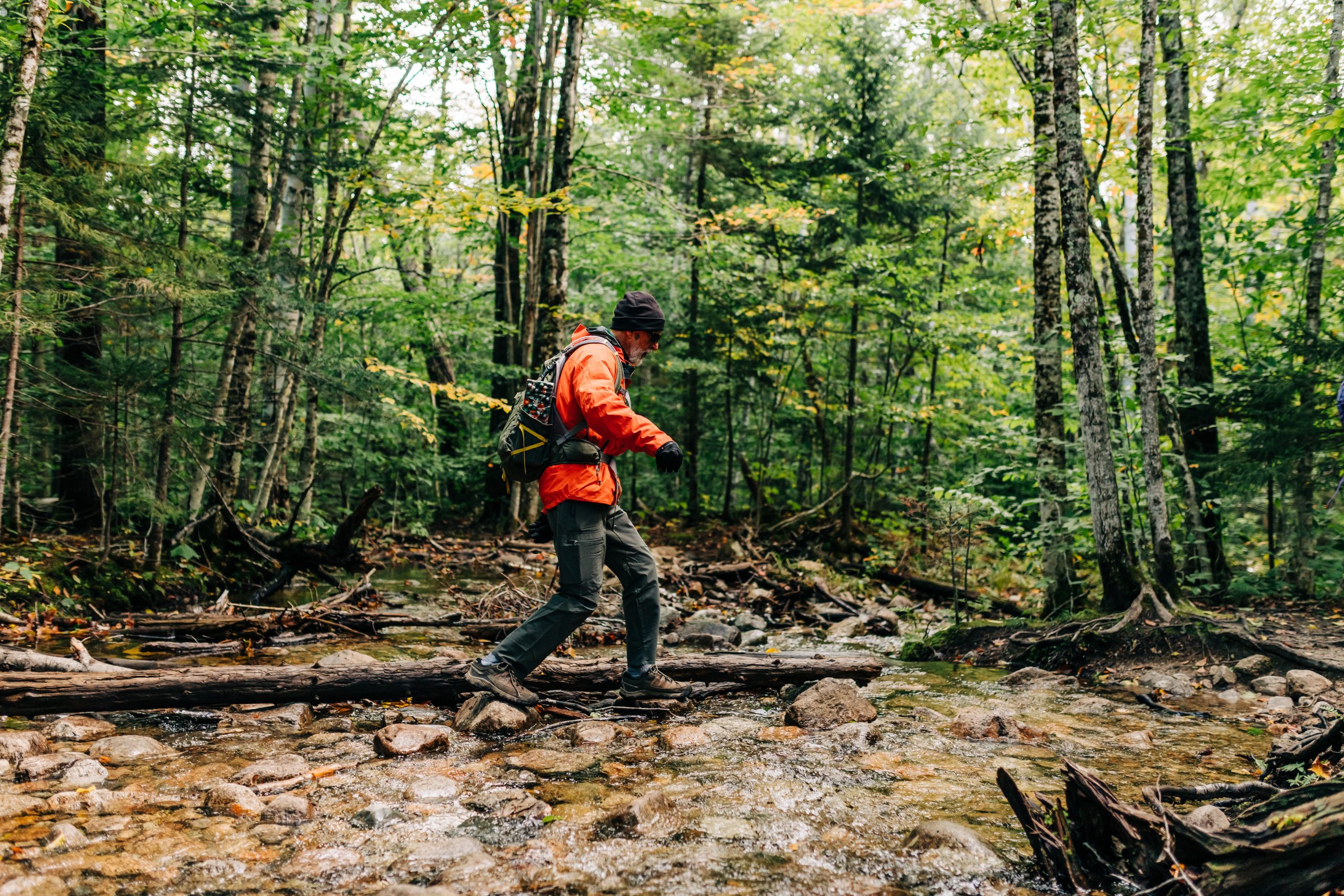
DeLucia’s top recommendation is also his simplest: when in doubt, wear blaze orange. The safety cone shade may seem garish to some, but its artificial hue makes it instantly recognizable against the earth tones of the woods.
Forty-three states require hunters to wear blaze orange in the field (some accept fluorescent pink as a fun alternative). DeLucia believes that hikers, and their dogs, should generally follow suit, even if they’re not legally required to.
“You want to make yourself visible,” said DeLucia. “It’s a courtesy thing.”
Know Your State’s Regulations
In the United States, non-endangered wildlife is managed by individual states. Each is charged with setting regulations for their own hunting seasons. Specifics can vary widely. Massachusetts and Maine, for example, are the only states in the country that ban hunting on Sunday; a holdover from Puritan days.
Whatever state you’re in, the hunting season may carry on longer than you realize and include areas you wouldn’t expect.
“Everyone thinks about November deer hunting,” said DeLucia. “But people are snowshoe hare hunting in the winter, then turkey hunting in the spring. And archery season for deer starts in September.”
In New Hampshire, licensed hunters are allowed on any state-owned lands and most of the White Mountain National Forest. But hikers are unlikely to encounter them in places like Crawford Notch State Park and Franconia Notch State Park, one of New England’s most popular hiking areas. “Hunters know to stay away from those places,” said DeLucia. “For one, you’re not going to see any wildlife because there’s so many people. And two, hunters are keenly aware of the stigma about going near those really busy trailheads.”
Think Twice Before You Bushwhack
The safest place to start a hike during hunting season is also the most obvious one: a trailhead. It’s illegal everywhere in the United States to fire a weapon on or across a trail. Responsible hunters go to great lengths to learn terrain, know their location, and ensure they’re not near one.
It’s generally best practice to stay on maintained footpaths while hiking. But if your next adventure does involve off-trail time, proceed with caution. Call out or wear a bell as you walk through the woods, just as you would in bear country. Avoid being out at dawn and dusk, when visibility is low and many game species are active.
Have a Question? Talk to a Game Warden.
Game wardens are the state employees charged with enforcing hunting regulations and monitoring wildlife populations. While some hikers may not be familiar with their work, they play a big role in keeping the outdoors safe and accessible by preventing poaching and ensuring that hunters are following the rules. They can also provide helpful guidance if you want to know more about the regulations in an area where you plan to recreate.
Here are some helpful links:
Maine Department of Inland Fisheries and Wildlife
Massachusetts Department of Fish and Game
Connecticut Department of Energy and Environmental Protection, Bureau of Natural Resources
Rhode Island Department of Environmental Management
New York State Department of Environmental Conservation
Delaware Division of Fish and Wildlife
Maryland Department of Natural Resources
West Virginia Division of Natural Resources
Virginia Department of Wildlife Resources