


This story is a sneak preview from the upcoming Winter/Spring 2027 issue of Appalachia, AMC’s journal of conservation and mountaineering. Subscribe today to read more great stories like this one.
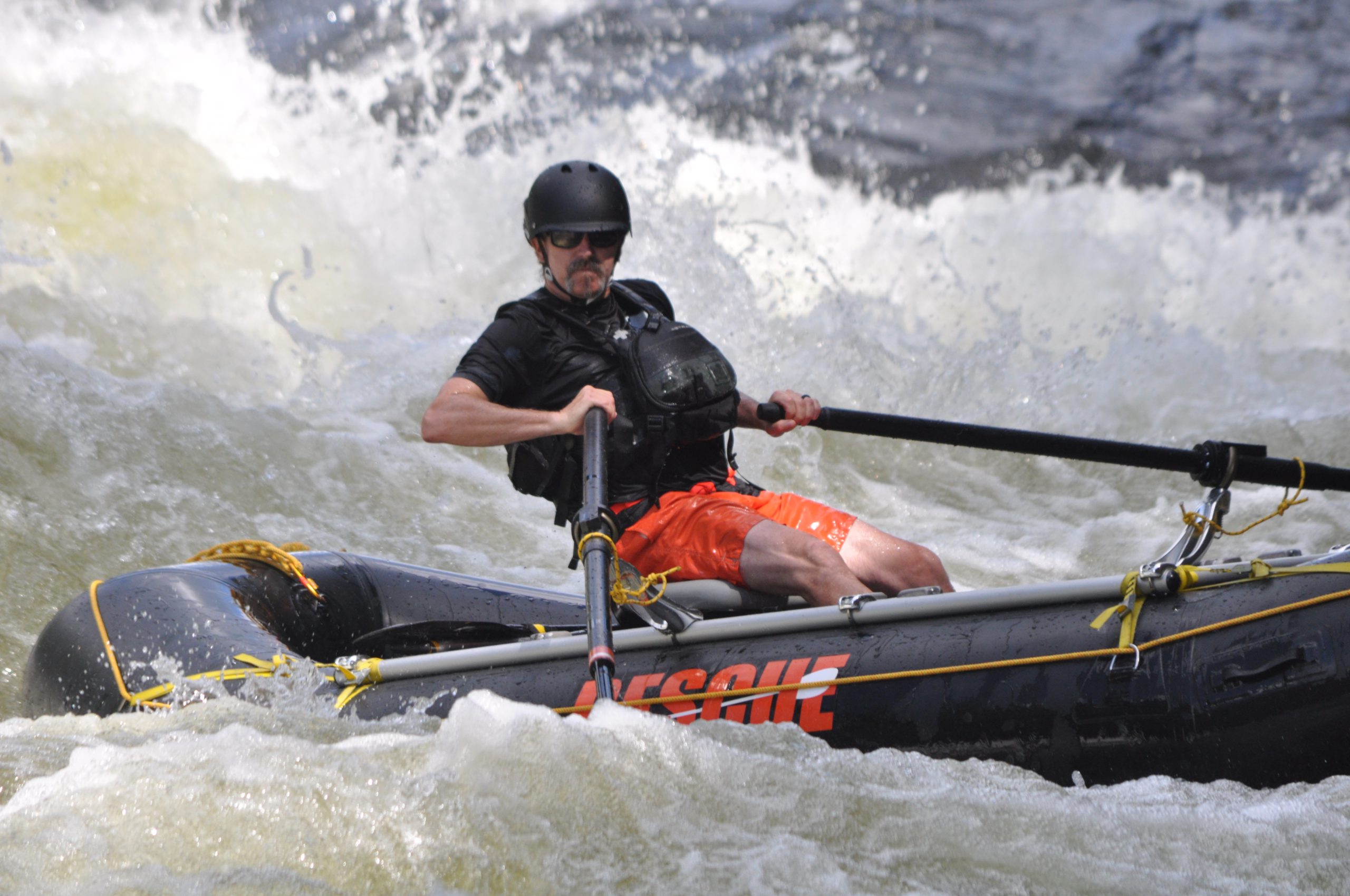
The White Mountain region’s newest search-and-rescue squad is only a decade old, but it already won what is considered the Nobel Prize for swiftwater rescue for a mission to save a hiker stranded on the Kinsman Trail. Team president and cofounder Darron Laughland was on that 2018 call. In the interview below, he describes how his team worked through the night with New Hampshire Fish and Game and Mountain Rescue Service to extract the hypothermic hiker—actions recognized the Higgins and Langley Memorial Award in Swiftwater Rescue at the 2019 International Association of Water Rescue Professionals conference.
A whitewater guide in New Hampshire, Maine, and New York, as well as a swiftwater rescue instructor with the New Hampshire Fire Academy & EMS, Laughland works full-time as a special education instructor at Kennett High School in North Conway, where he lives. He is also connected to another protagonist in this issue of Appalachia: Charlie Walbridge. Laughland describes himself as one of Walbridge’s disciples in the arena of swiftwater rescue and safety; the two longtime paddlers have presented together at the New York State Technical Rescue Conference.
This journal has reported more than once on hiker drownings in the White Mountains, and it often seems related to sudden rains that cause rivers and streams to swell quickly. Do people tend to underestimate the dangers of water travel?
I am reluctant to second-guess a person’s decision. However, I think simple ignorance and lack of understanding of how powerful rapidly moving water is could be a factor, compounded by perceived urgency to cross rather than wait or go around—be it from fatigue, cold, or pressure from outside world deadlines.
What led to WMSRT’s creation?
Local paddlers were kayaking when New Hampshire Fish and Game and local fire departments were responding to rescues or fatalities in the rivers. We would offer help, but they would decline. We were frustrated.
The paddling community has an intimate knowledge of local rivers and safely navigating them. We get good at rescuing each other, chasing boats down, unpinning canoes, and managing risk. We have raft guides, climbers, ski patrollers, etc. who also bring additional expertise.
In 2013, we started meeting with fire chiefs, fish and game officers, boat liveries, and the established search and rescue teams. [New Hampshire Fish and Game] Sergeant Brian Abrams and the board of Mountain Rescue Service were instrumental. We got our 501(c)(3) status in 2016, organized our group, developed a callout list, adopted bylaws, etc. This led to additional swiftwater rescue training, and, of course, fundraising and the less glamorous stuff that is part of being a nonprofit.
Ben Selleck, a swiftwater rescue instructor and swiftwater and flood rescue coordinator at the New Hampshire Fire Academy, opened doors when he invited the team to participate in a night search exercise with a Swiftwater Rescue Technician Advanced course, along with the U.S. Forest Service, the New Hampshire Army National Guard rescue helicopter aviators and aircraft, and the local fire department.
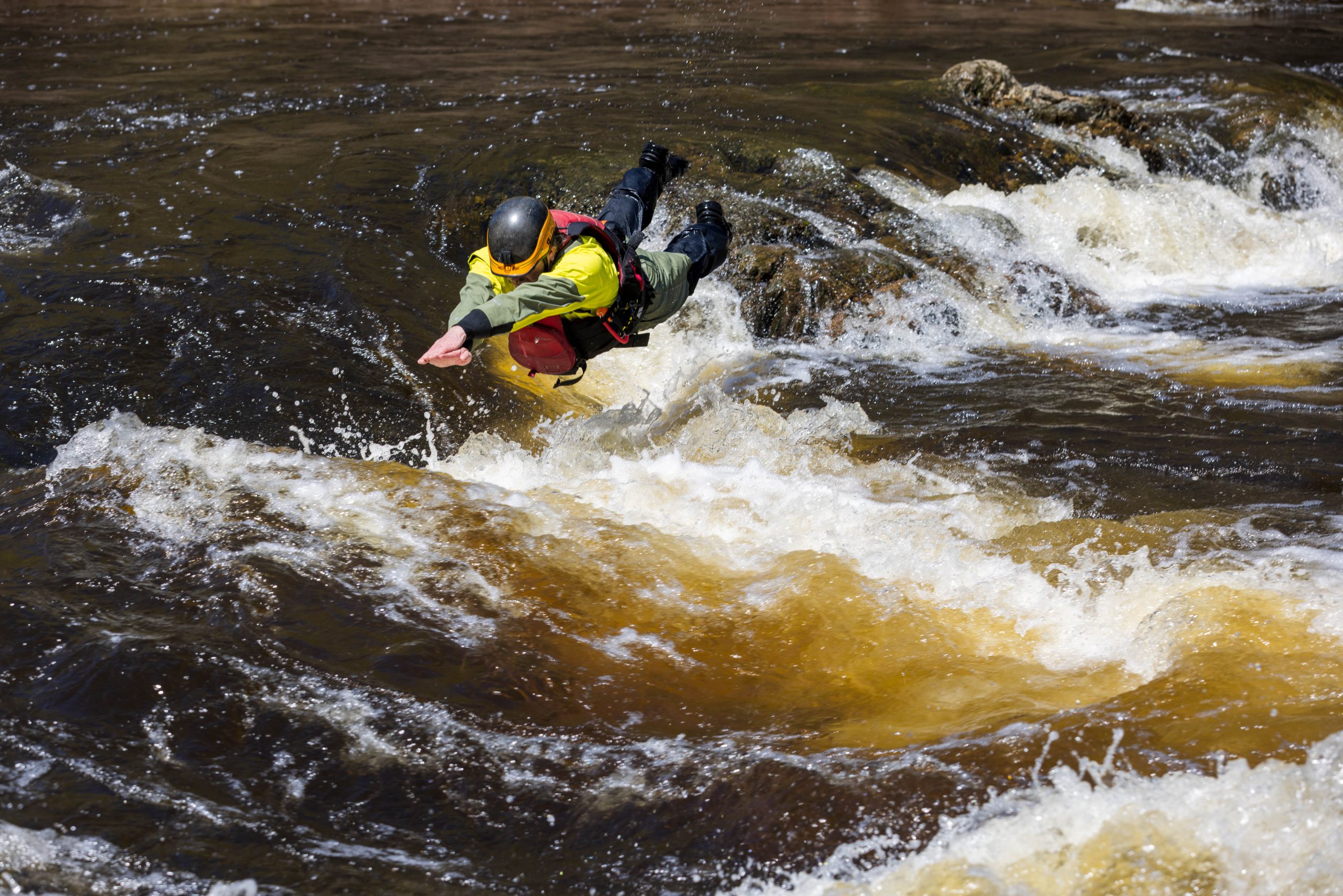
How did you personally come to be involved in swiftwater rescue? What was your journey?
My first formal course was a one-day whitewater safety course with Laurie Gillion as part of an American Canoe Association course in 1995, then a full course with Charlie Walbridge in 1999 on the Moose River in western New York as a rookie whitewater raft guide. Charlie was the legend who came in to spread the gospel. He was one of the original prophets for swiftwater rescue and safety, and he in turn schooled a bunch of disciples, who carried on the gospel. I am one of them.
Over decades of guiding, kayaking, and canoeing, I have had lots of opportunities to fish people and gear out of moving water. I’ve also faced some personal losses in the water.
The impact of seeing a drowned raft guest on the Dead River, the death of my friend Cliff Eisner while paddling together, and the loss of Dennis Squires, who drowned while paddling in New Zealand and with whom I had paddled a few times—all in the same year—became a potent trifecta that drove me to learn more and work towards growing the skills to be safer and able to help the people I paddle with.
You provide professional training through the Sawyer River Group and the New Hampshire Fire Academy. How do the training requirements for a municipal firefighter differ from the specialized skills in a WMSRT volunteer?
Members of the paddling community, through the mentoring process, grow the mindset that we have a responsibility to look out for each other. It’s simply part of the deal. A common adventurer has no legal obligation to help, but paddlers as a whole seem to demonstrate a high moral commitment to helping. Volunteering as a member of a SAR team seems like an extension of this. The big difference is, we have the choice.
The men and women in the fire service or agencies tasked to respond to emergencies do not have a choice. They have to show up, regardless of the extent of their knowledge, skills, and equipment. In terms of training requirements—most of the people taking a swiftwater rescue course are river people who want to grow their skills, increase confidence, learn to be safer, and as we say, “become a solid river partner.” The fire rescue personnel often take it to advance their skills and to meet the requirements of the agency they work for.
We have extraordinary rescue professionals in our communities, and it is a privilege to share my knowledge and expertise with them. If I can pass on skills to execute an effective rescue that helps or saves someone and ensures the rescuer goes home to their family—mission accomplished.
One time that a hiker prudently chose to not cross a dangerous river was in December 2018, when your team was called for help. This ultimately led to your team receiving the 2019 Higgins and Langley Swiftwater Rescue Incident Award. What were key factors in that mission’s success?
The backpacker on the Kinsman Trail had walked across Cascade Brook in the morning, no problem. Then it rained all day, he got soaked wading through slushy snow, and the place where he intended to cross the river was raging. He set up his tent on the snow, got in his sleeping bag, ate his food, and sat there for several hours. He became hypothermic. With his phone battery dying, he called 911.
New Hampshire Fish and Game called Mountain Rescue Service and us around 8 p.m. NHFG’s Lt. Mark Ober was in charge.
Our crew consisted of Leanne Bernier, one of the best kayakers in New England, and Jake Risch, one of our cofounders, who was comfortable in high-stress situations and a competent Class V paddler. Crispin Battles, Eric Wallhagen, and I also responded from our team.
We grabbed all our gear, ropes, rigging, throw bags, drysuits, food, extra layers, all that stuff, and hauled two whitewater kayaks about a mile and a half up into the woods. There was a big waterfall, and at the bottom was a pool about 35 feet wide with an eddy on either side. The hiker was on the other side on a snow ledge. The river was cranking.
Our plan was to get the two boats in and ferry a messenger line across so MRS could rig up a climbing line to transport the hiker over the river. I was standing by as a tethered swimmer, ready to dive in the water and grab somebody if they fell in.
Jake and Leanne are two of the strongest paddlers in the Whites, and for them it was straightforward. Once they had a line across, they pulled the rope system and tied off an anchor. Members of MRS built a system, tensioned the lines, a member crossed over on the line, grabbed the hypothermic individual and sent him across, grabbed his gear and returned. The paddlers untied the anchor, pulled the ropes back across, paddled back, and by then the hypothermic hiker was walking out with New Hampshire Fish and Game. I got home at about 4:30 a.m.
It was a dangerous technical mission immediately upstream of a steep slide with exploding waves, in snowmelt, in the dark, and in the middle of the night. WMSRT and MRS had trained this exact scenario a couple of months before. It went exactly how the coach drew it up in the locker room.
The 25-member White Mountain Swiftwater Rescue Team gets about a half-dozen callouts a year, most often to search for missing people, shuttle individuals across rivers or swollen streams, and access flood victims. What motivates your team?
Outdoor enthusiasts, especially people who really get after it, appreciate the thin margin between safety and risk. It’s part of the game, so to speak. Because of that, it seems to make sense to give back to the community that has your back when you are out pushing your limits.
We are people who love mountains and rivers and want people to responsibly enjoy them as well. Sometimes, things go sideways. Then it’s time to give back.