


This summer, AMC’s Research team doubled in size, welcoming interns from across the region, including Washington D.C., Virginia, and Massachusetts. From catching clouds to sampling dragonfly larvae, the young scientists put their skills to work in the field while contributing to AMC’s 150-year legacy of science in the outdoors.
Elanor "El" Hart
University of Vermont, Class of 2028
Lakes of the Clouds Intern
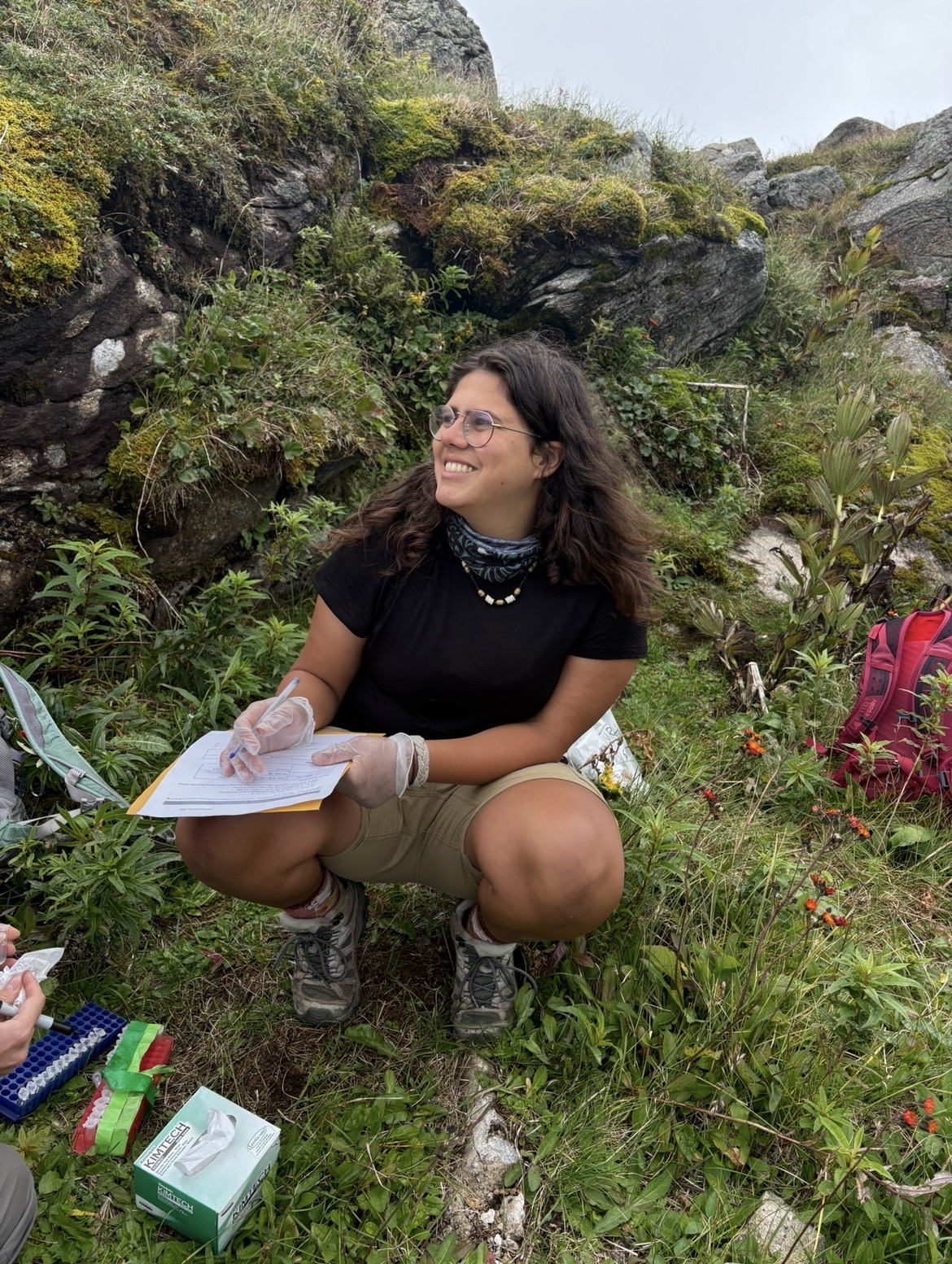
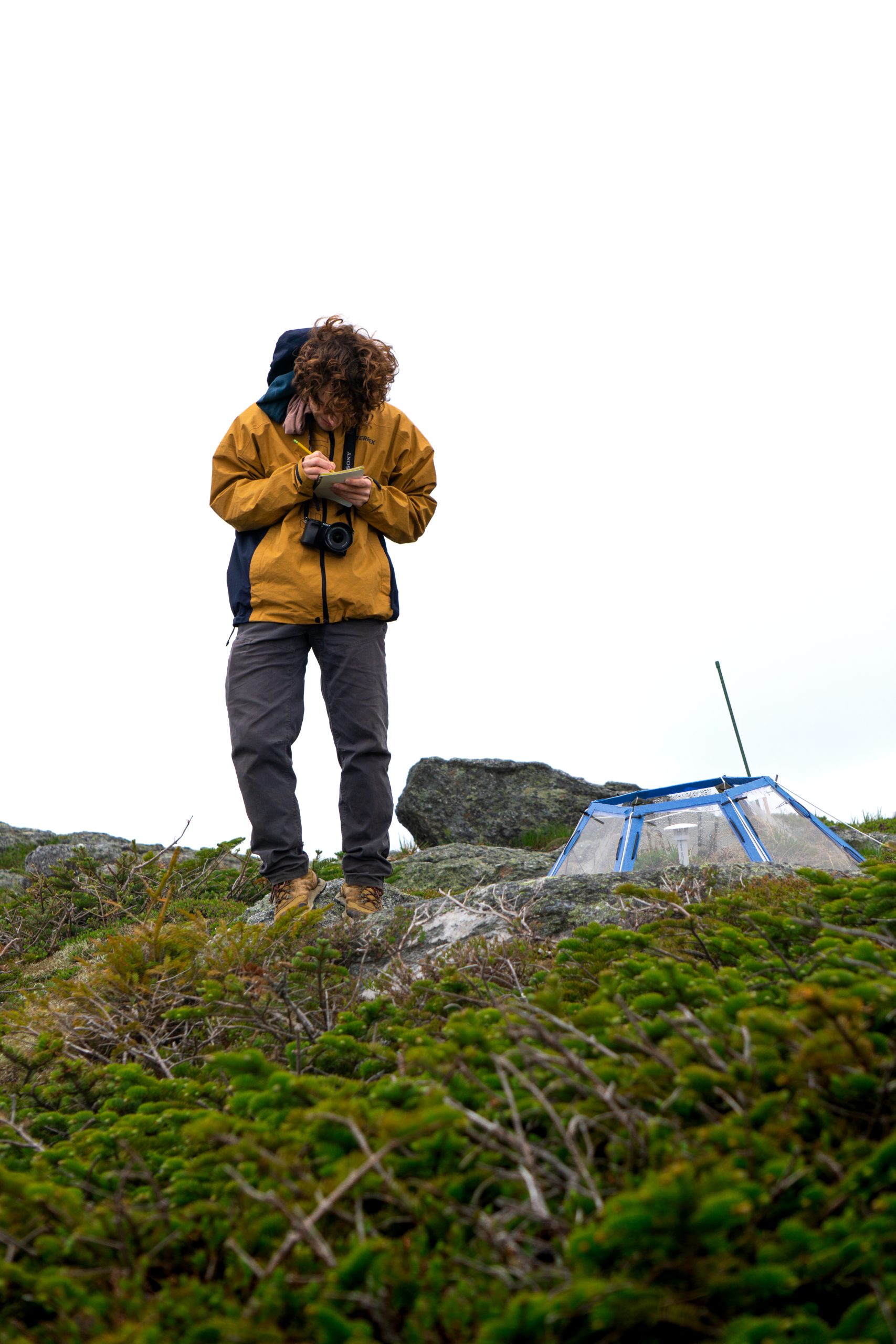
If you hiked up to the Lakes of the Clouds Hut recently, you might have seen me frolicking across the trails, taking environmental DNA samples of pollinators, bottling clouds, and monitoring 50 open-top warming chambers scattered across the mountainside. The long-term air quality monitoring project even had me trekking out in 80-mph winds, hail, and pelting rain to open the cloud catcher and collect cloud samples for pollutant testing. It was definitely a lot more engaging than working in an office!
My favorite part of this position was sharing knowledge and experience with the community. Taking people out to work with the cloud catcher and watching their eyes light up as we ran through the rain to bottle a cloud was the highlight of my summer. It is so important to get people involved in science. Everyone feels more engaged and connected when they’re making an impact!
Neena Goldthwaite
Bowdoin College, Class of 2024
National Parks Service Intern
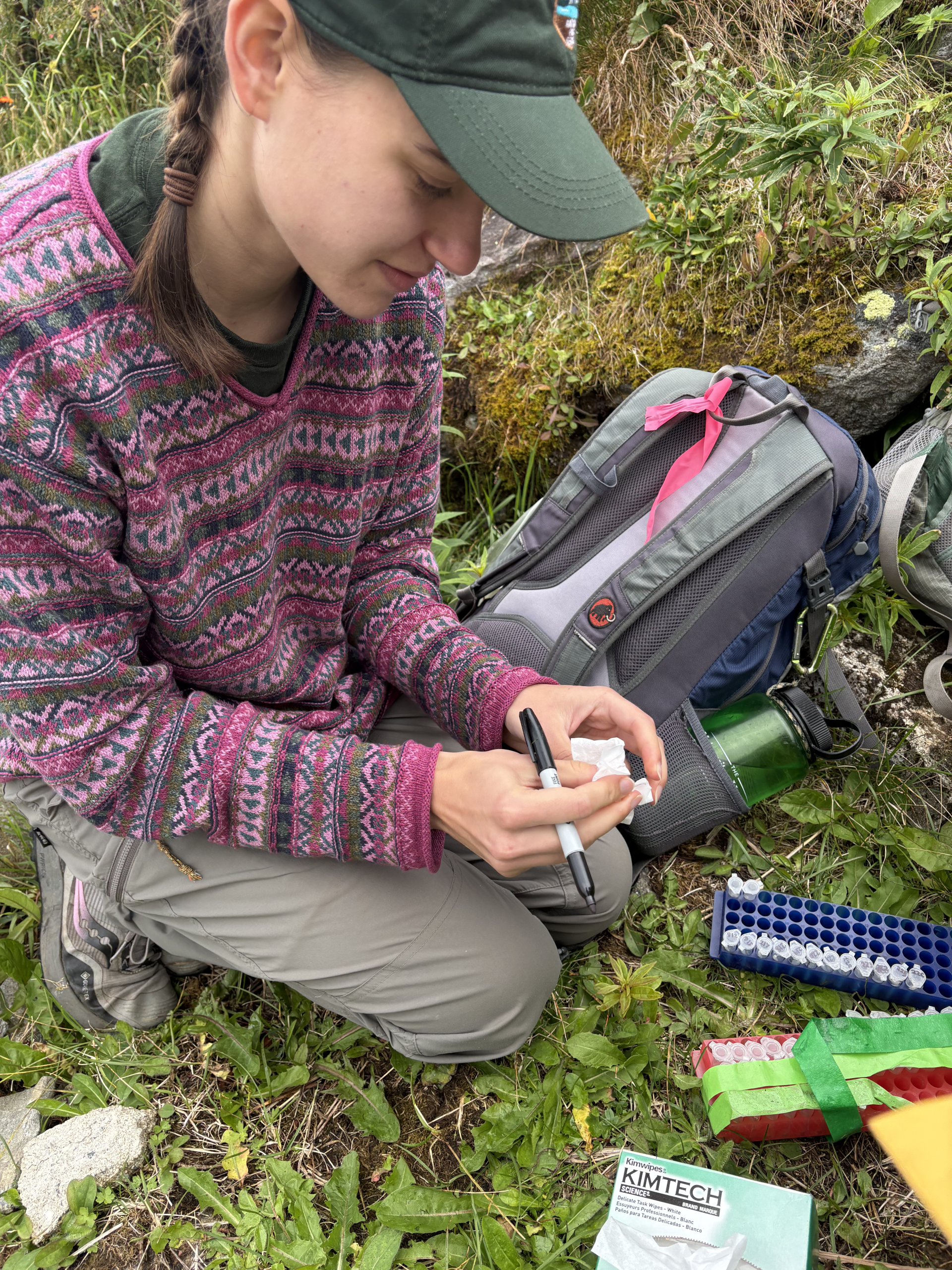
My work focuses on one of our community science projects, which tracks the timing of plant life-cycle events, like flowering and fruiting, along the Appalachian Trail. The Research team uses data from AMC’s iNaturalist project, Flowers and Fauna along the Appalachian Trail Corridor, in combination with monitored to crowdsource a large dataset. With this data, we can investigate how species are responding to a changing climate, identify potential bioindicators, and explore cascading ecosystem effects such as phenological mismatch, when interacting species’ life-cycle events no longer occur in sync.
Using iNaturalist, we also hope that contributors learn about and develop a greater connection to the natural world and the research happening in places they visit. I’ve also enjoyed assisting other research projects through fieldwork involving wildlife cameras, stream monitoring, pollinators, and alpine ecology.
Liam Zeilinger
University of Vermont, Class of 2027
Base Research Intern
This summer, I was able to see firsthand how air quality affects rain and cloud chemistry, and I was able to add to a dataset that goes back to the 1980s. It was exciting to clearly see how policy—and the research that informs it—works to reduce air pollution and haze. I also enjoyed traveling to different regional alpine zones, like the Adirondack High Peaks and the Bigelow Range, to do vegetation surveys, identify rare alpine plants, and establish monitoring sites.
This internship allowed me to learn and experience research outside of academia, something I hadn’t had a lot of exposure to prior to starting at AMC. I really enjoyed the practicality of AMC Research. It was clear why we were researching each topic and how the answers would inform conservation and policy decisions. This experience has made me more interested in biogeochemistry, how chemicals cycle between the living and the non-living parts of the environment, and I’ll be taking the skills and experiences I acquired throughout the summer and applying them in my work throughout the rest of my time at UVM and beyond.
Madelyn Wood
St. Olaf College, Class of 2022
Research Intern
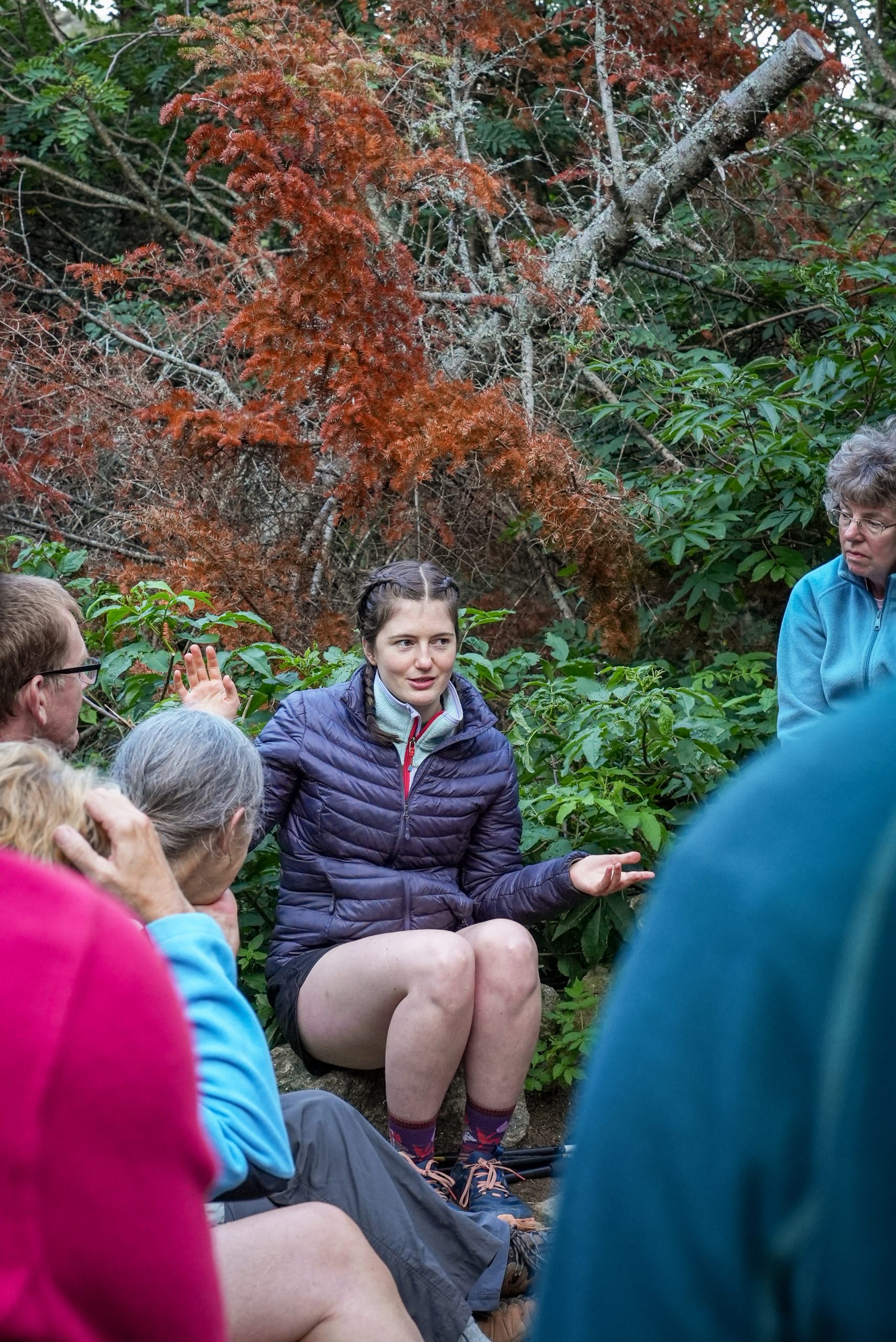
This is my third year with AMC Research, and every year I fall more in love with this environment, the people in it, and AMC as a whole. This year I took a step back from day-to-day work and spent more time teaching new interns, working with hut naturalists, coordinating collaborations with other research institutions, and working on AMC-wide projects like signage and the AMC150 Relay.
My favorite parts of my job are all the odd side-quests that make every day an adventure, but the awe and wonder this environment inspires is what keeps me coming back. Every year I repeatedly say, "This is my job! I'm getting paid to do this!" just to pinch myself. Whether it's the White Mountains or the 100-Mile Wilderness in Maine, I get to explore and learn about the ecosystems, then share the work we're doing with other departments, AMC members, and the community.