


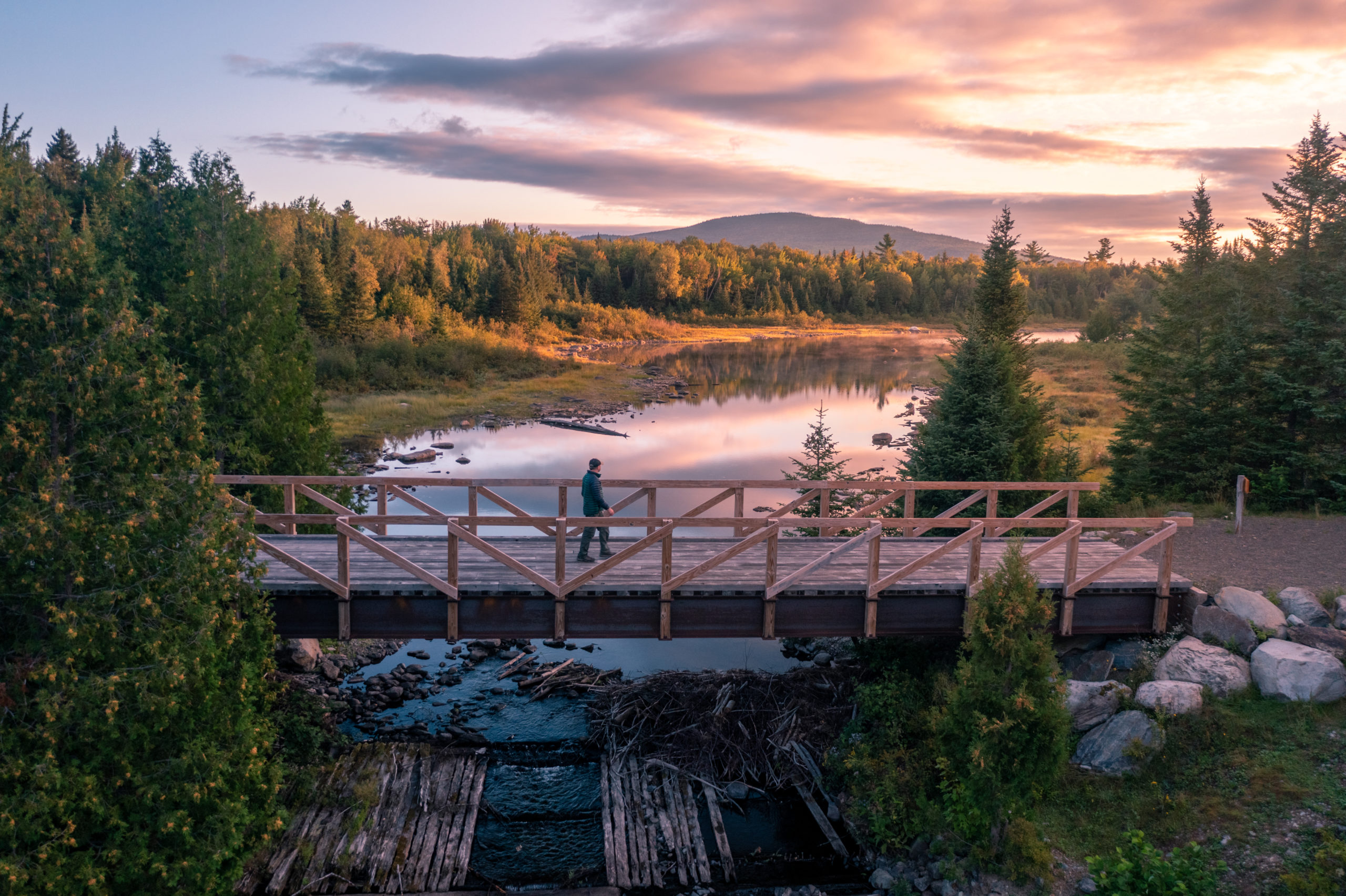
Enjoying a sunset walk across a trail bridge in the protected lands of the Maine Woods.
Getting into the outdoors promotes sustainable behavior
The Appalachian Mountain Club’s mission is to foster the protection, enjoyment, and understanding of the outdoors. But when it comes to conservation and recreation, we often get asked what one has to do with the other. Some ask why we support key conservation initiatives. Others still question why we don’t stick to just one.
In fact, conservation and outdoor recreation are intricately linked. You really can’t have one without the other. That’s something AMC’s founders recognized nearly 150 years ago. And it’s still true today.
Here are just a few examples of this interdependency.
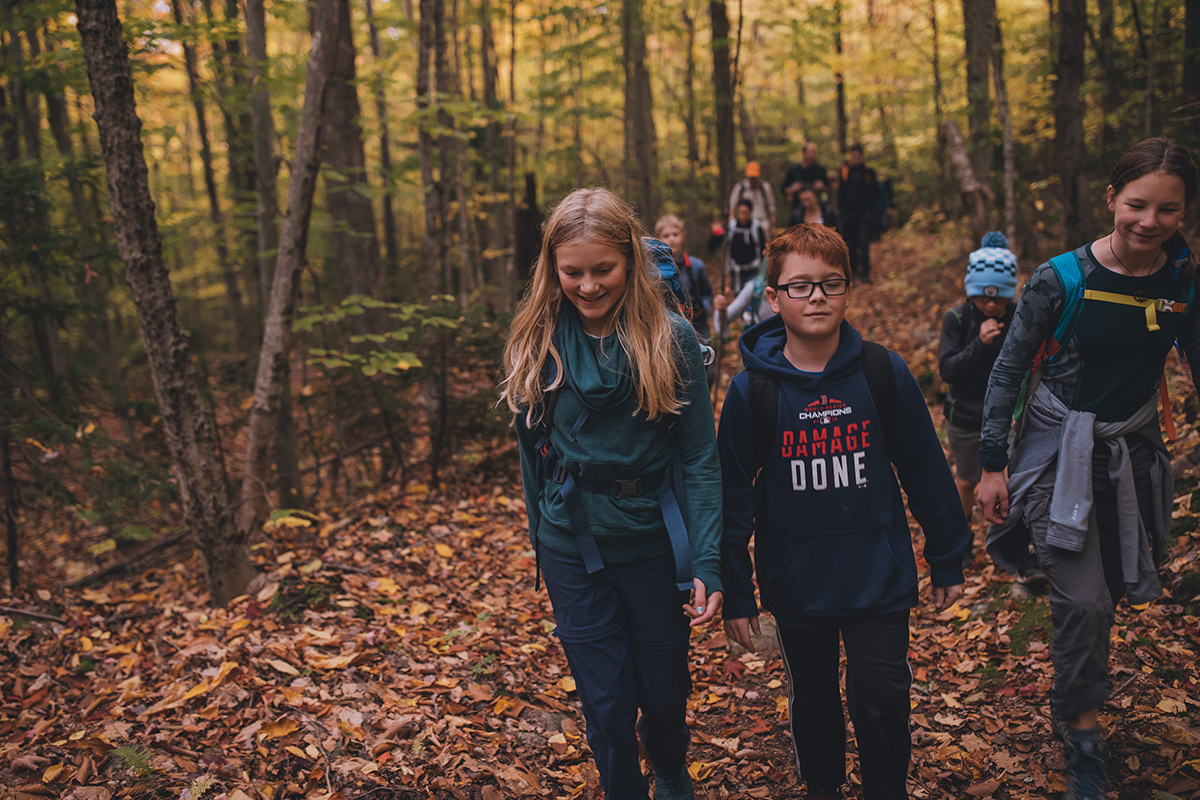
Youth outdoor program participants exploring the outdoors on a hike through Blue Hills Reservation.
Conservation preserves the spaces in which we love to recreate
Perhaps obvious, but outdoor recreation requires, well, space for us to recreate. And lots of it. Just think: a 90 acre park may only contain 4 to 8 miles of trails. If you’re a hiker or biker, you know that’s not much. Efforts to preserve and expand places that afford us the opportunity to partake in the pastimes we love are at the heart of our ability to be outdoors.
We know, however, that simply setting aside land for recreation is not enough. Removing abandoned dams and supporting clean water initiatives helps revive inland fisheries, leading to greater opportunities for anglers to enjoy their sport. Protecting forests and avoiding clear-cutting provides space for cross country skiers to enjoy a trip through the woods. Advocating for clean air lets us continue to observe creatures in the wild. Advocacy needs to be diverse to match the diversity of interests and needs of outdoor enthusiasts.
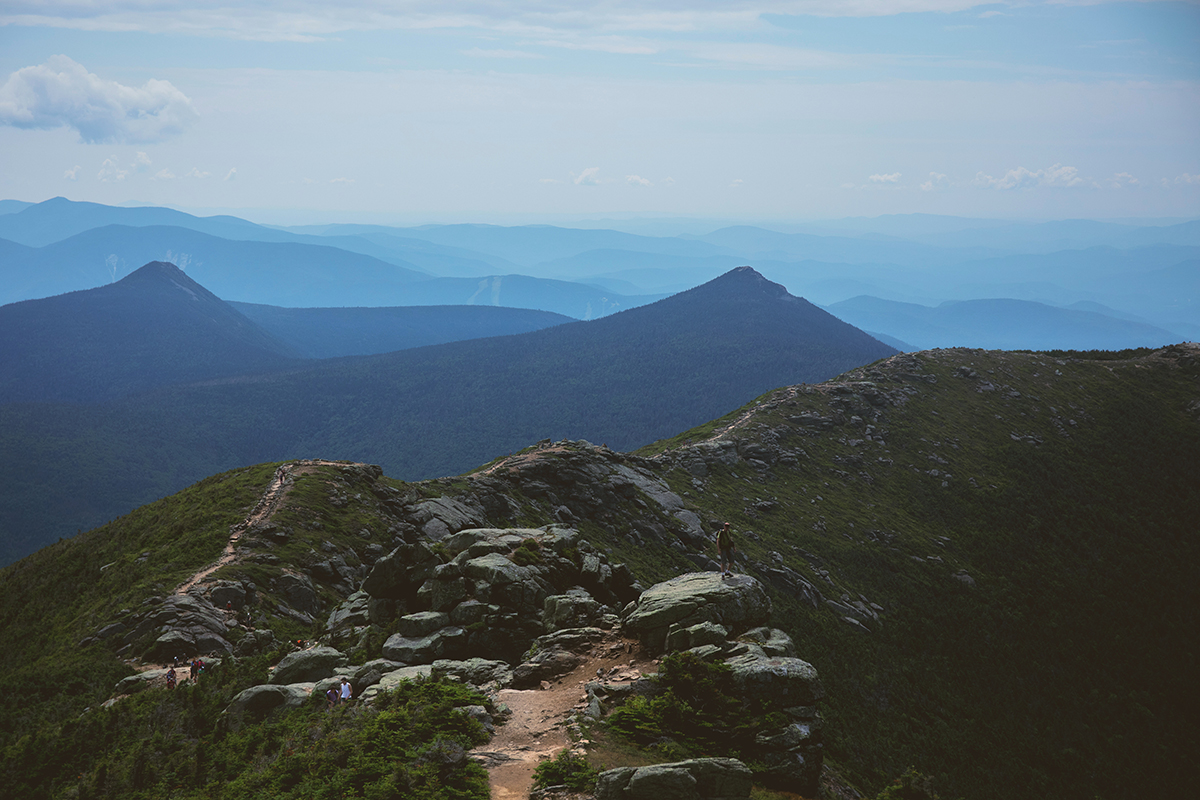
A scenic view of Mt. Flume and Mt. Liberty from the Franconia Ridge Trail – part of one of the White Mountains National Forest’s protected ecosystems.
Recreation infrastructure protects sensitive ecosystems
Well built and maintained outdoor recreation infrastructure is perhaps our best conservation tool. Imagine a mountain on which each hiker was permitted to chart their own course. In addition to lots of lost hikers, the negative environmental impact would be huge. Fragile plant species would be trampled and existing slopes would degrade. That’s one of the reasons that AMC has made outdoor infrastructure improvement a priority.
Take the Franconia Ridge Trail, for example. The ridge is home to a 230-acre alpine tundra system, one of the rarest ecosystem types in the Northeast. While the vegetation there can survive extreme conditions, most of the species there can be significantly damaged when stepped on. A well-maintained trail prevents such trampling. That’s one of the reasons AMC is about to embark on a $1.1 million project to improve that trail.
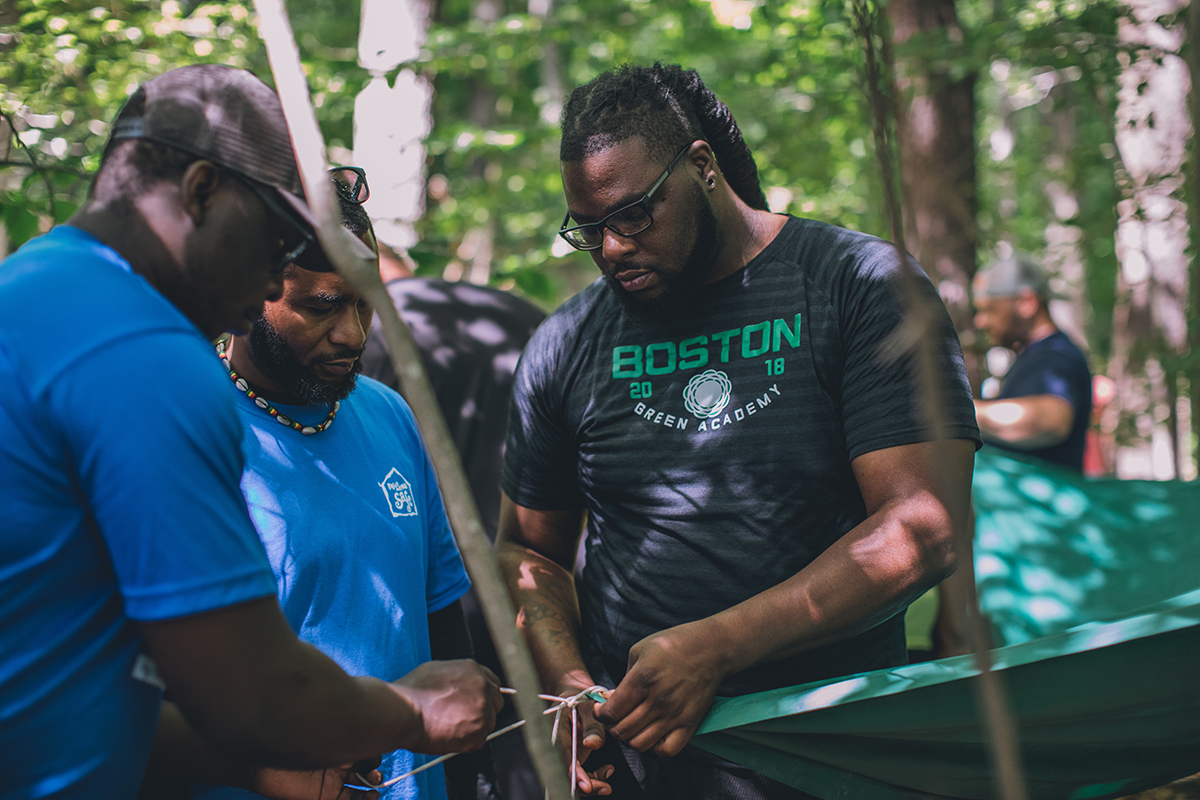
Group participants learn how to set up a tent during a outdoor learning program.
Getting into the outdoors promotes sustainable behavior
We know from medical science that being outdoors is good for your physical and mental health. But research has also increasingly found that it can be good for the outdoors as well. In fact, increasing emotional affinity towards nature motivates behaviors that protect nature. So, as more people join us in our effort to be outdoors, we’re building a community of people committed to preserving the spaces we love.
One way to grow this affinity is to give people access to the skills and tools to be comfortable outdoors. AMC’s Center for Outdoor Learning and Leadership (COLL) does just that. COLL’s accessible and affordable resources, workshops, and trainings, led by a team of experienced staff and volunteers, cater to anyone interested in expanding their knowledge and skills in outdoor activities, naturalist and scientific topics, conservation advocacy, trails stewardship, and outdoor leadership.
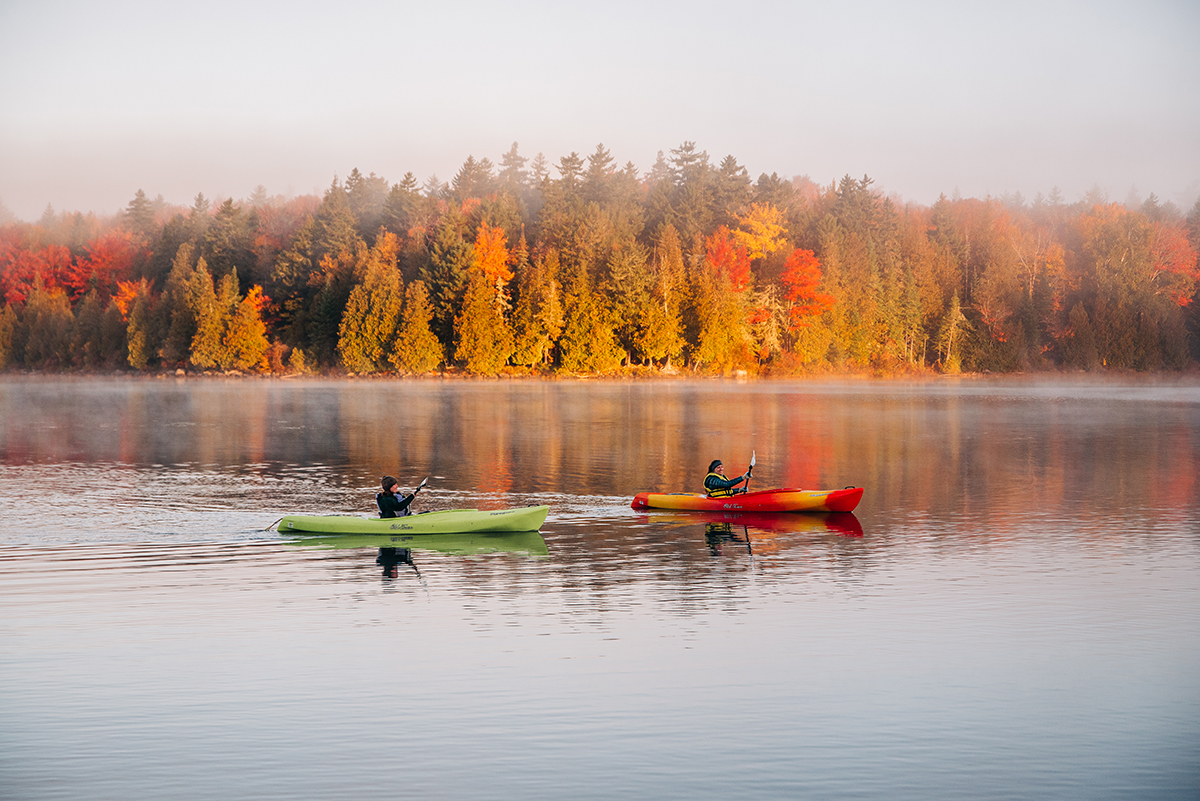
Kayakers paddling the protected waters in vast wilderness of the Maine Woods.
Outdoor recreation adds economic stability in communities near our natural resources, incentivizing their protection.
According to the U.S. Bureau of Economic Analysis, the outdoor recreation industry generates $689 billion in economic output each year, including 4.3 million jobs. That activity has tremendous positive economic impact in the communities near outdoor recreation areas. Importantly, it also incentivizes those communities to protect and expand conservation space as areas of both ecological and economic importance.
In Maine, for example, AMC’s Maine Woods Initiative has created work opportunities for local carpenters, shop owners, and loggers. An enhanced network of cross country ski trails also brings more visitors to the region during seasons where local businesses generally experience a lull in activity.