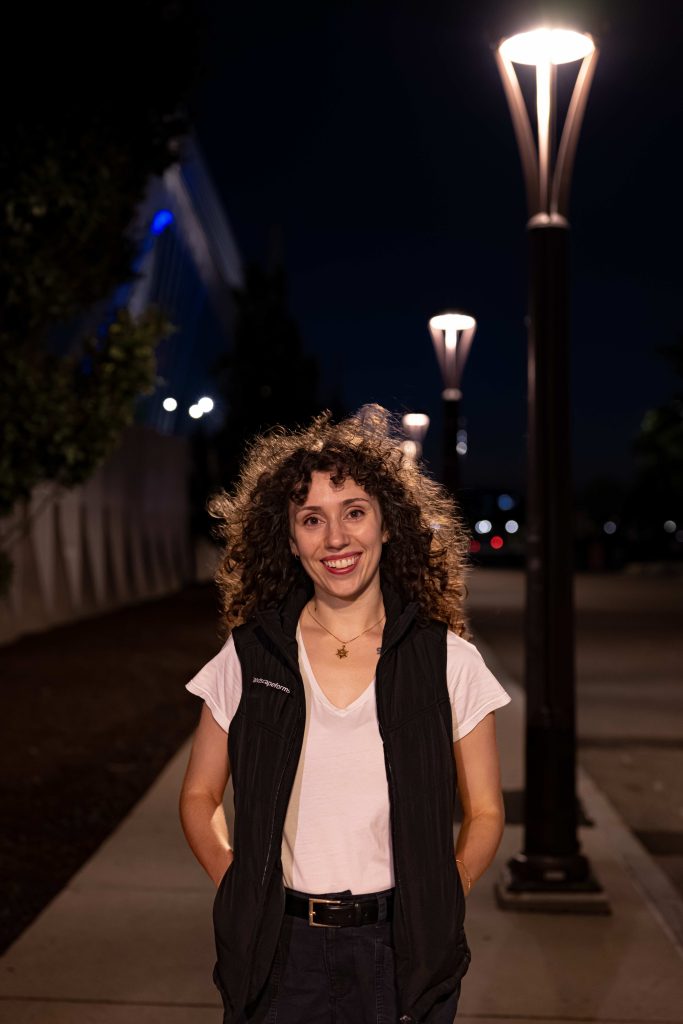
With a name that means “star,” it’s no wonder that Stella Murray is drawn to the night sky.
When she joined AMC last December, Murray was looking for a way to connect with the outdoors beyond her neighborhood. Living in Boston’s North End without a car, many outdoor adventures felt out of reach. A single member webinar was all it took to connect a lifelong passion with a new mission.
Like many members, Murray was eager to get involved. At AMC’s Virtual Volunteer Fair, she learned about the Conservation Action Network, a community of AMC advocates who take action to support policies that protect outdoor places and local communities.
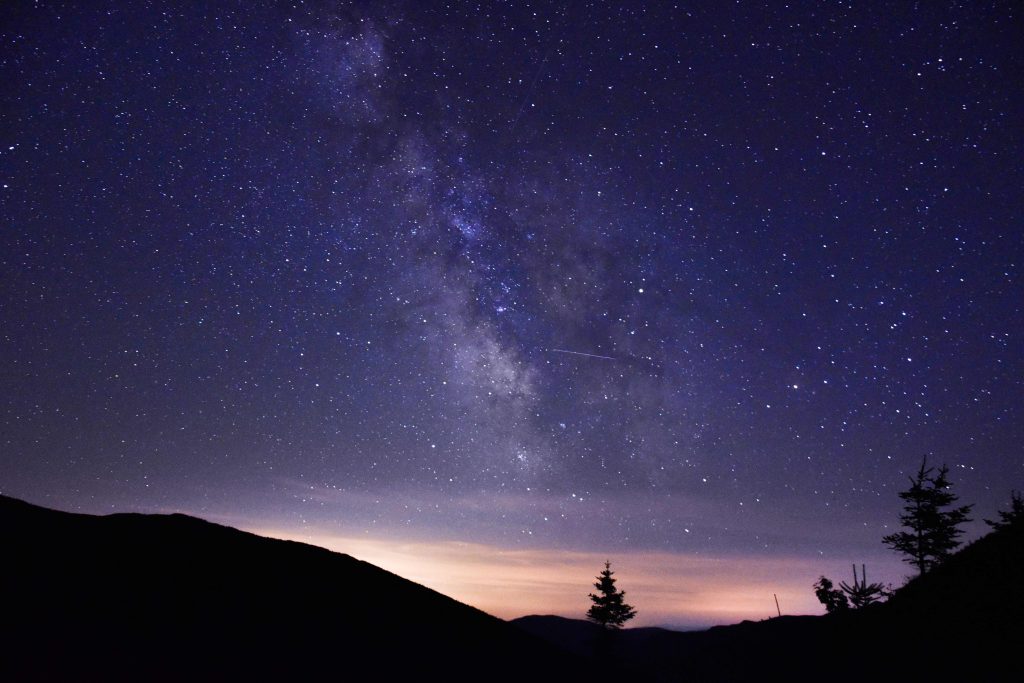
Earlier this year, members of the network helped pass legislation in Maine requiring new and renovated public infrastructure to use dark sky friendly lighting, which reduces light pollution and glare.
It was a topic Murray knew quite a bit about.
“It connected the dots for me,” she says. “This was something I could genuinely help out with.”
Murray is an architectural lighting designer for Landscape Forms, an exterior lighting manufacturer that offers dark sky friendly luminaires. She also serves on the Sustainable Lighting Committee for the Illuminating Engineering Society, where she helped contribute to responsible lighting guidelines used around the world.
Through her work, Murray has seen how artificial light at night affects ecosystems in ways many people rarely consider. Artificial light at night can lead migratory birds off course, interfere with human sleep cycles, and disrupt the natural behaviors of wildlife that depend on darkness to forage, navigate, and reproduce. Fortunately, simple changes, such as directing outdoor lights downward, choosing warm-colored lighting, and using timers or motion sensors, can significantly reduce light pollution while still maintaining safety and visibility.
“People are already enjoying the light these fixtures provide and may not even realize they’re better for the environment,” says Murray.
Because of her longstanding interest in protecting the natural night environment, AMC’s dark sky work, including its stewardship of an International Dark Sky Park in the AMC Maine Woods, had already caught her attention. Learning about the Maine legislation made her realize she could contribute her own expertise.
Now, she’s putting her expertise to work with AMC’s policy team by identifying examples of dark sky friendly lighting already in use across Massachusetts. By highlighting successful projects and sharing information about them, she hopes to make responsible lighting solutions feel more accessible to decision-makers, businesses, and community leaders considering similar approaches.
Her experience is proof that meaningful conservation work can begin with a simple interest.
“The best thing that anyone can do is just reach out,” she says. “AMC is such a great support system, and they’ll help reroute you until you’ve found concrete action items that you’re excited about.”
The work is far from finished. Murray is continuing to identify examples of dark sky friendly lighting, build connections, and explore new ways to support advocacy efforts in Massachusetts. Less than a year after joining AMC, she’s already helping advance a cause she cares deeply about.
“I now live and breathe dark sky,” Murray explains. “Volunteering with AMC was a way to not only focus locally but also reach people outside of the lighting industry. Anyone with an interest in the outdoors can join AMC, which makes it the perfect place to further my passion and continue spreading the word.”