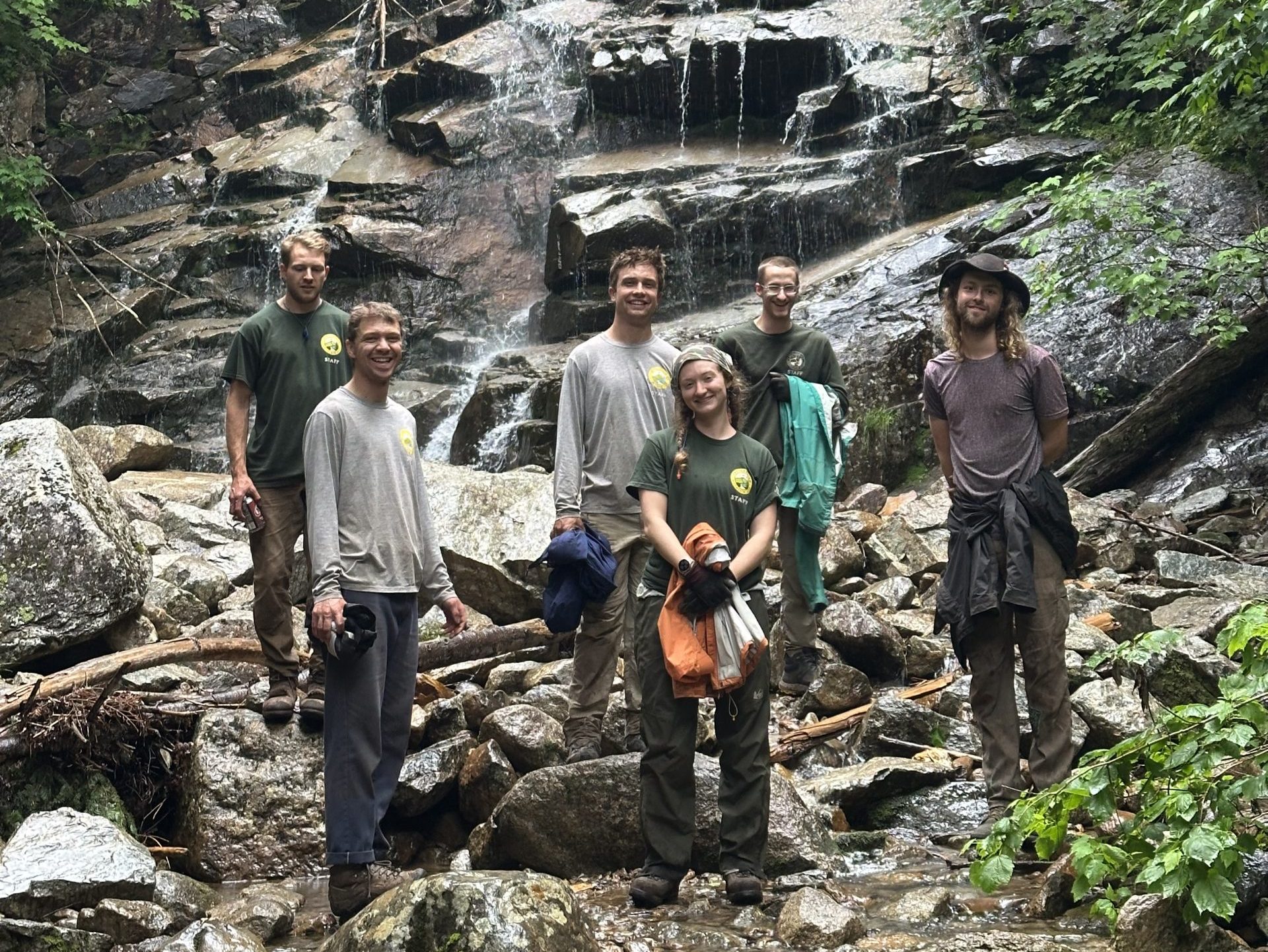
In 2024, Liesl Magnus—fresh off a multi-year stint on trail crews in Montana and Idaho—returned East. Once a winter hut caretaker for AMC, they would now serve as its professional trail crew manager for all its projects in New England. Near the top of their list: relocating a mile-long section of Falling Waters, one of the most popular pathways in the region.
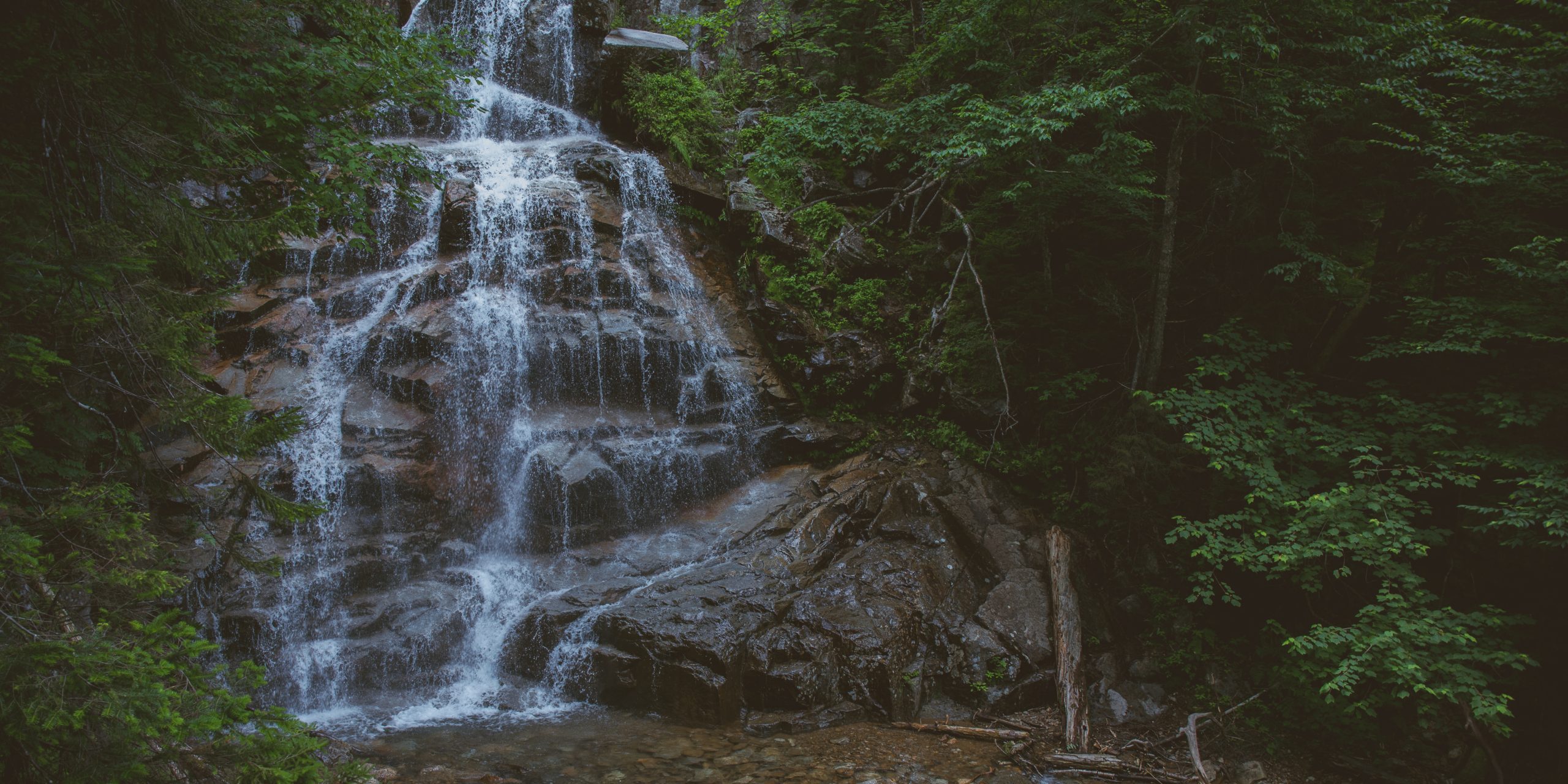
For decades, the old Falling Waters Trail had been the first leg of the Franconia Ridge Loop, a trek so revered that National Geographic named it amongst the 20 best in the world. The route crisscrossed the oxymoronic Dry Brook; ascending alongside waterfalls before breaking treeline and onto the Franconia high alpine.
The path was exciting, stunning, and ultimately unsustainable. As the Franconia Ridge Loop grew in popularity, Falling Waters was left horribly eroded. An increasing number of search and rescue missions followed.
In 2022, AMC—in coordination with the U.S. Forest Service and other partners—was awarded a $1.1 million Congressional appropriation to revitalize the four trails of the Franconia Ridge Loop: Falling Waters, Franconia Ridge, Upper Greenleaf, and the Old Bridle Path. For most of the loop, that meant restoring existing pathways with new trail building techniques. In the case of Falling Waters, however, the Forest Service decided the historic route was too damaged. It would need to be relocated.
In September, that reimagining process concluded with the grand opening of an improved Falling Waters Trail.
“I’ve spent the last two years thinking about every linear foot of this trail. I’ve been out here in the rain. I’ve been out here when it’s 100 degrees. I’ve watched 100 incredibly hardworking young people pour their entire selves into this,” said Magnus. “Now we’re giving it away to the public.”
Water and People
There’s a saying amongst trail builders: keep people on the trail, and water off it.
When hikers stray from a path, they erode the surrounding landscape and trample vegetation. Often, the reason is water; whether it’s pooling in middle of the trail or washing out whole sections.
Many of the historic footpaths in the White Mountains were not designed with this principle in mind. Instead, their builders sought the steepest grades from a summit, the same direction that gravity pulls water. On popular trails, like Falling Waters, it creates a vicious cycle. As hikers clamber around obstacles and erode their immediate surroundings, they create new spaces for water to flow. This in turn forces users farther afield, expanding the trail’s footprint.
By the time AMC began restoring the Franconia Ridge Loop, it was seeing as many as 1,000 visitors a day during peak season. Much of the topsoil on Falling Waters was gone. Instead, hikers climbed over rocks smoothed by flowing water and slick with moss. Accidents on the loop were more common than anywhere else in the White Mountains outside of Mount Washington, the deadliest peak in the Lower 48.
While some online critics would blame inexperienced hikers for the trail’s eventual closure, the truth was more complex. The old Falling Waters Trail, as beautiful as it was, had not been designed to meet 21st century demand. Nothing short of gravity would change that.
Forging the Path
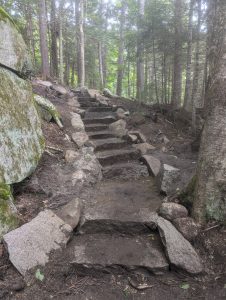
Plotting a new route, or tread, as builders call it, requires both practical knowledge and creativity. The best ones feel like curated journeys, while respecting the demands of the landscape.
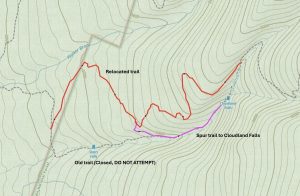
Planners for the new Falling Waters tread needed to accomplish two things. The first was practical: prevent erosion by moving the trail away from Dry Brook and onto a more gradual grade. The second was aesthetic: maintain a viewpoint of the waterfalls that gave the trail its name.
To accomplish the first goal, designer Peter Jensen plotted a trail loosely following a historic logging road just north of Dry Brook. While the road was overgrown, it would provide a baseline on which to build. From there, he drew in a spur—or out and back pathway—to the base of Cloudland, the tallest and most breathtaking of the brook’s waterfalls. Tying it all together would be three rock staircases up the trail’s steepest sections.
In trail building, no plan is absolute. Many decisions, like whether to build over or under a specific boulder, can only be made once work begins.
“Sometimes you just don’t know what you’re going to find until you sink a tool into it,” said Magnus.
Working in the Garden
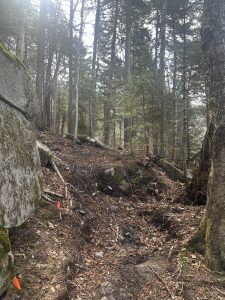
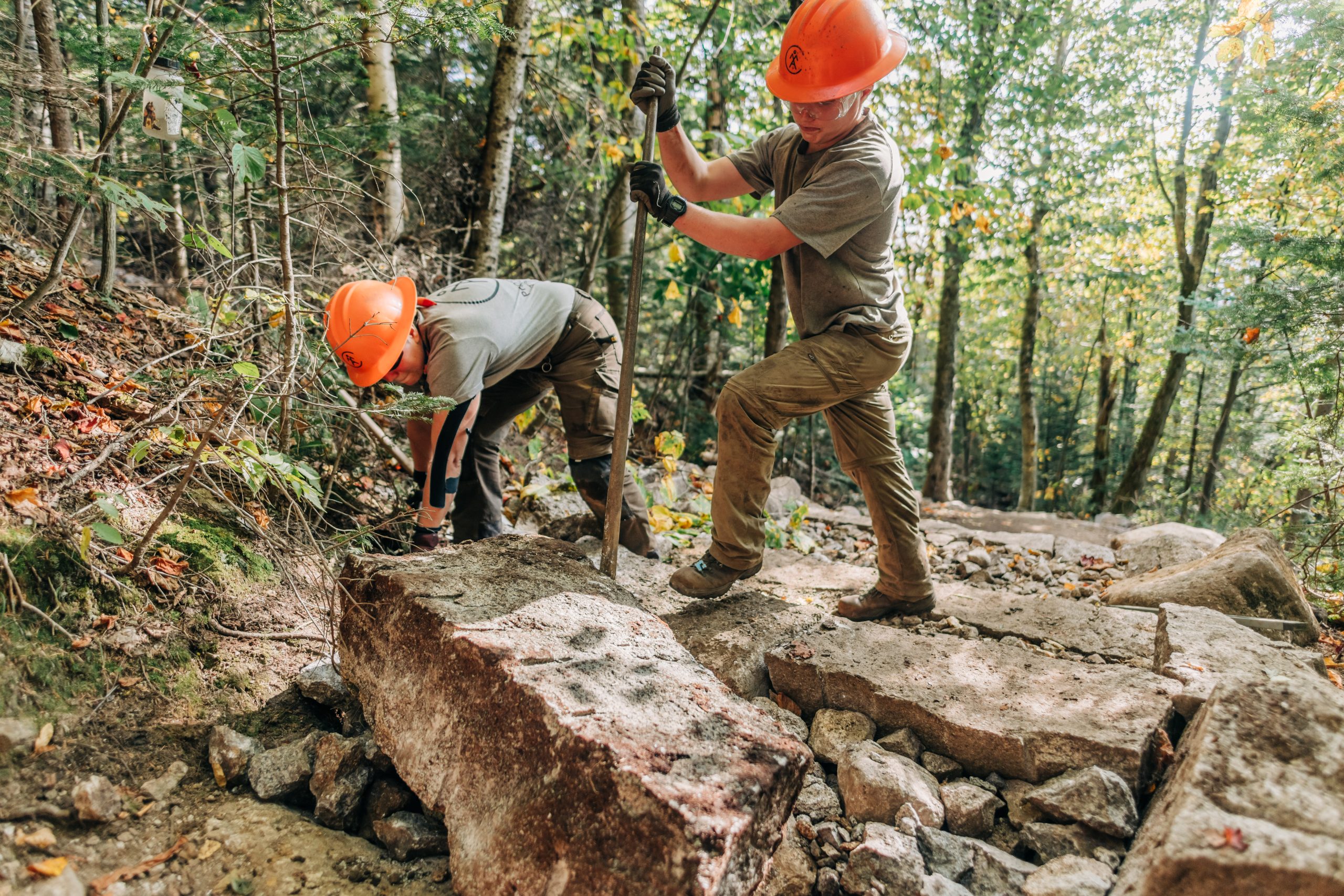
In May 2025, the tools came out. The crew kicked off the project by clearing the trail corridor of debris. They then dug into the slopes of the hillside, creating an even pathway for future hikers.
As the project’s manager, Magnus wore many hats, not all of them hard hats. Often, their workdays were spent in the office, ensuring a smooth flow of materials to the site and working through any staffing challenges. In the field, they tried to be a cheerleader as much as a boss.
If the day’s logistics were set, Magnus would do the work that others were tired of; the kinds of repetitive tasks that make projects possible. That usually meant hauling equipment or “making crush” —beating a rock into small pieces with a hammer. The crush was then filled into the trail surface and around stone steps.
While the relocation was arduous, the elements were on the team’s side. The hardwood forests around Dry Brook were filled with loamy, mineral soil that was perfect for trail building. Even the great boulders on the path split cleanly.
“It felt like the Garden of Eden for trail building,” said Magnus.
The Finish Line
The 2026 season kicked off with the entire AMC professional trail crew onsite, a rare occurrence. In just five days they cleared a path for the spur, quarried much of the stone for the trail’s steps, and built a skyline—a suspended cable system for pulling heavy stone. When peak season got underway, a core group stuck around: AMC professionals, plus crews from the Student Conservation Association of New Hampshire, Vermont Youth Conservation Corps, and NorthWoods Stewardship Center.
In all, the partners combined for more than 7,000 hours of labor that summer.
Then one day, the hammers stopped ringing. For Magnus, the end was bittersweet. They had grown accustomed to this stretch of woods. Now, their team would be making way for thousands of hikers. It was their turn to learn the forest.
“There’s a little bit of sadness,” said Magnus. “But then I get our project list for next year and I just start planning all over again.”