


When you hear the words “scientific research,” most people think of sterile labs with halogen lights, scientists in white coats, test tubes and beakers. But spend a day in the field with an AMC researcher and you’ll come away with a sweatier, grittier vision of what science can be (and probably some trail dust on your clothes, too).
AMC researchers are some of the most punk rock people I’ve ever met. They catch clouds, track alpine plants, measure snowpack, and monitor air pollution in rain, wind, snow, and blazing sun. They brave mosquitos and blackflies in the name of science. They hike so many miles that they wear through multiple pairs of sneakers each season. And they do it all to protect you and the places you love.
AMC’s Conservation Research team is known throughout the East for producing high-quality, peer-reviewed data and analysis on climate change, air and water quality, forests, and mountain ecosystems. At a time when science in the U.S. faces drastic funding cuts and large-scale environmental policy rollbacks—decisions that have serious implications for the health of people and the outdoors—these scientists are out in the field, working hard to collect data that informs the policies AMC advocates for. In the words of Senior Director of Policy Mandy Warner, “We are still doing science. This was probably the most creative, determined, elbow grease field season ever, but we’re getting it done.”
This summer, I went behind the scenes to find out what the research team has been up to in 2025. But don’t take it from me—straight from the mouths of the experts, from long-term monitoring projects to plant life cycles and dragonfly mercury sampling, here are their dispatches from the field.
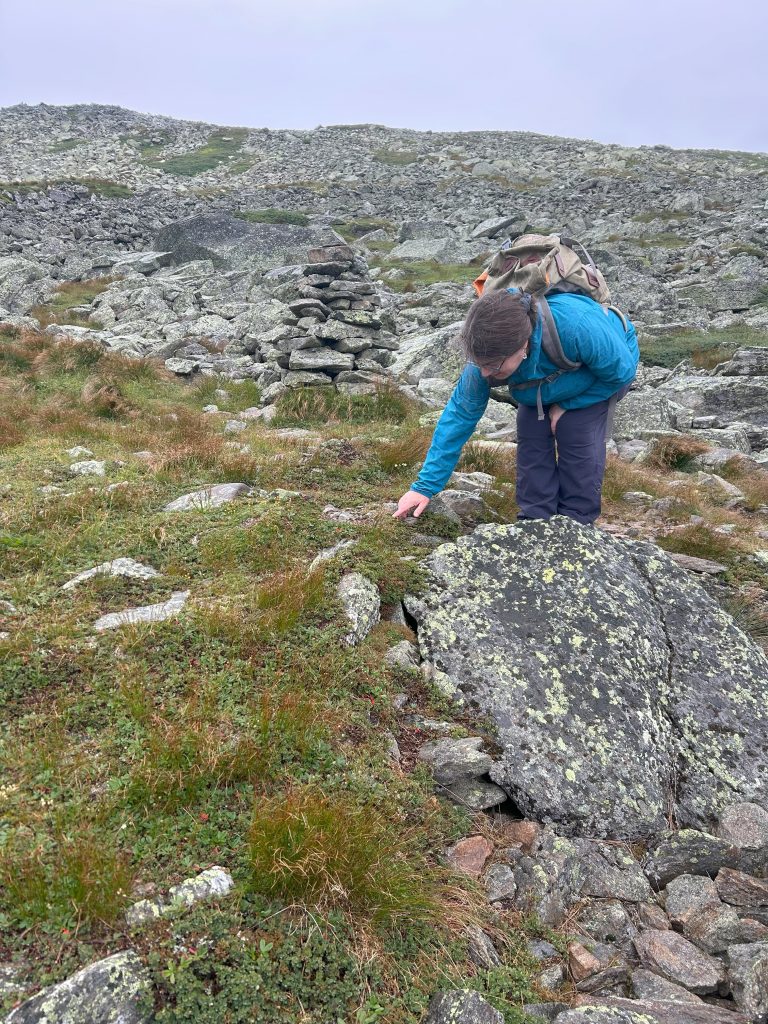
Georgia Murray, AMC Senior Scientist
AMC has been tracking air quality in the White Mountains since the early 80s. When I began working here in 2000, the air quality issues of acid rain, haze particulate and ozone were still very concerning. The sources of this pollution were smokestacks and tailpipes from the Midwest and Eastern Seaboard. The good news is the Clean Air Act regulations that were implemented in the last three decades have reduced those sources, and AMC has documented cleaner cloud and rainwater, lower ozone levels, and less haze in the White Mountains of New Hampshire because of them. With climate change, we now face not just regional pollution but global pollution that we contribute significantly to. The same sources, smokestacks and tailpipes are still emitting greenhouse gases, and we need to address how we can responsibly reduce our share of these global emissions. This summer I have been focused on one very visible climate change impact affecting our region: forest fires.
I love that I can do applied science and monitoring that informs the public about important lung health and ecological impacts of things they can’t see or touch, but the data can help them understand. I also am a big fan of long-term monitoring, and AMC has played an important role in keeping these data streams going and demonstrating that federal clean air laws can improve air quality in remote mountain regions.
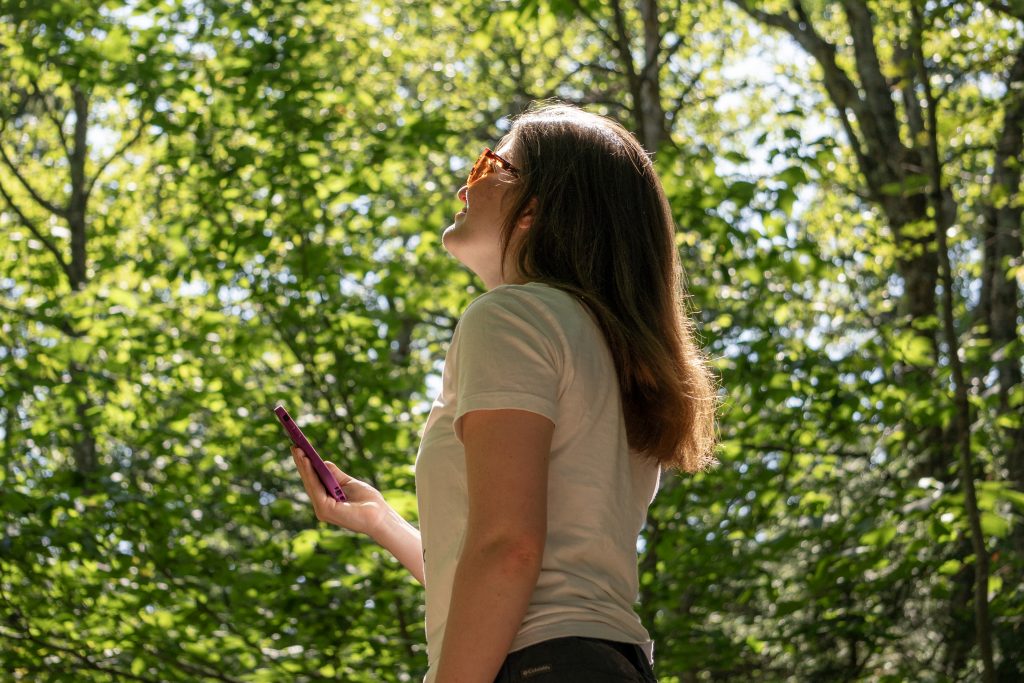
Madelyn Wood, AMC Research Assistant
As a Research Assistant I get to work in the field helping a wide variety of projects, as well as spearheading the community science phenology work for the season. With climate change, the timing of lifecycles of plants–known as phenology–is changing. By monitoring plots, working with the AMC naturalists in the huts, and using iNaturalist to gather data from the length of the Appalachian Trail, we can understand how this change will impact different plants and ecosystems. I love the collaborative nature of my job. We wouldn’t be able to answer these questions by ourselves, so doing outreach and helping people understand why it’s important and how they can contribute is key.
If you’re interested in contributing to this work, download the iNaturalist app and join our project, Flowers and Fauna along the Appalachian Trail Corridor
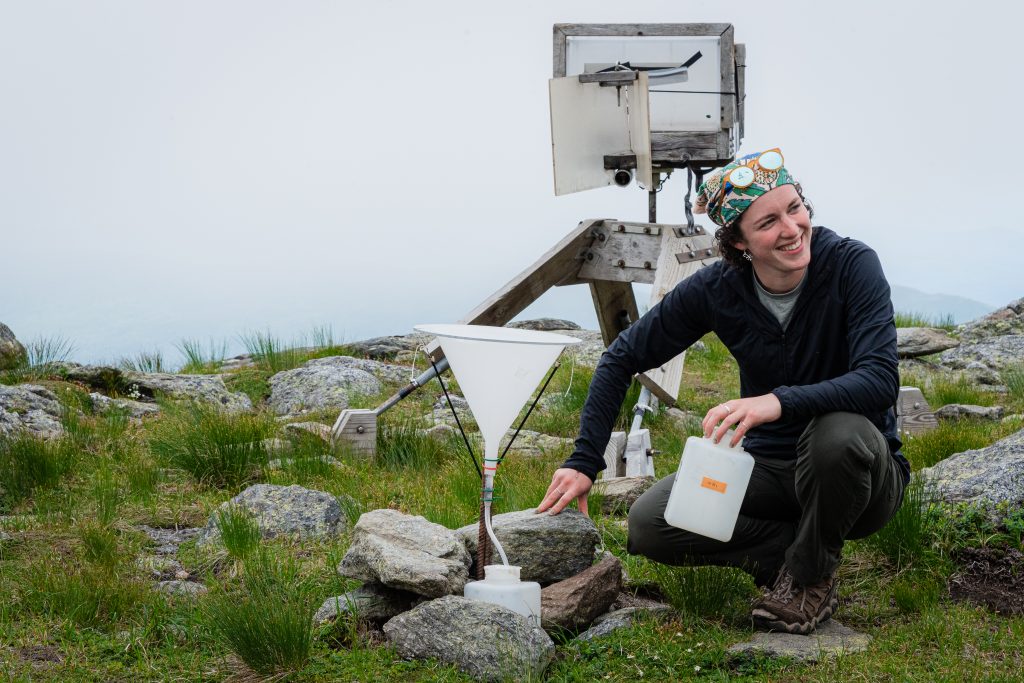
Alice Gipe, 2025 Lakes Research Intern
Since 1980, the AMC has been collecting data on air quality in the White Mountains. As the researcher at the Lakes of the Clouds Hut, I have had the opportunity to continue this research for the summer. By collecting rain and cloud samples from this region, we can learn what pollutants and chemicals are in the air, and therefore what is impacting the alpine ecosystem. This data is continuously relevant due to increasing wildfire smoke events and changing climate conditions.
Addy Budliger, 2025 Base Research Intern at Pinkham Notch
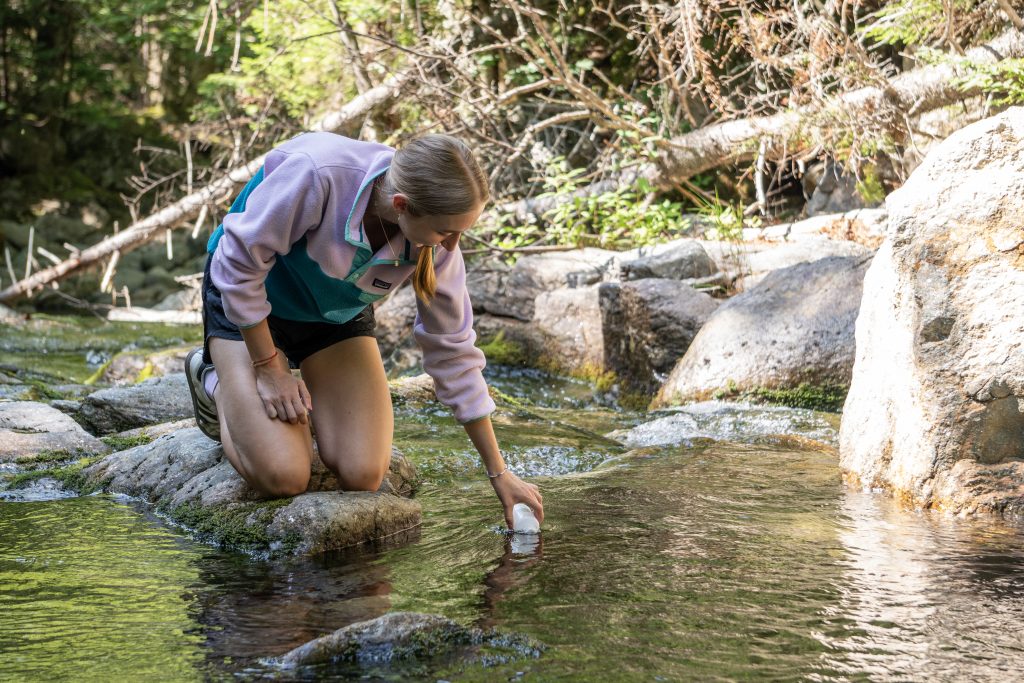
I’ve spent the summer learning about all of the AMC research studies, including plant phenology, pollinators, and air quality. However, I have spent the most time working on our water quality monitoring.
Each month, AMC interns visit sites across New Hampshire and Maine to take samples of stream water. That stream water is brought back to the chemistry lab at Pinkham Notch. We test the water for pH and conductivity so that we can add the data to an ongoing study about the quality of stream water. Additionally, we use the chemistry lab to test the quality of cloud and rain samples taken by Alice Gipe at the Lakes of the Clouds hut on Mount Washington. Tracking cloud, rain, and stream water quality over long periods of time is important for our understanding of what particulate matter is in the air and being transported through the water cycle.
Dr. Sarah Nelson, Director of Conservation Research
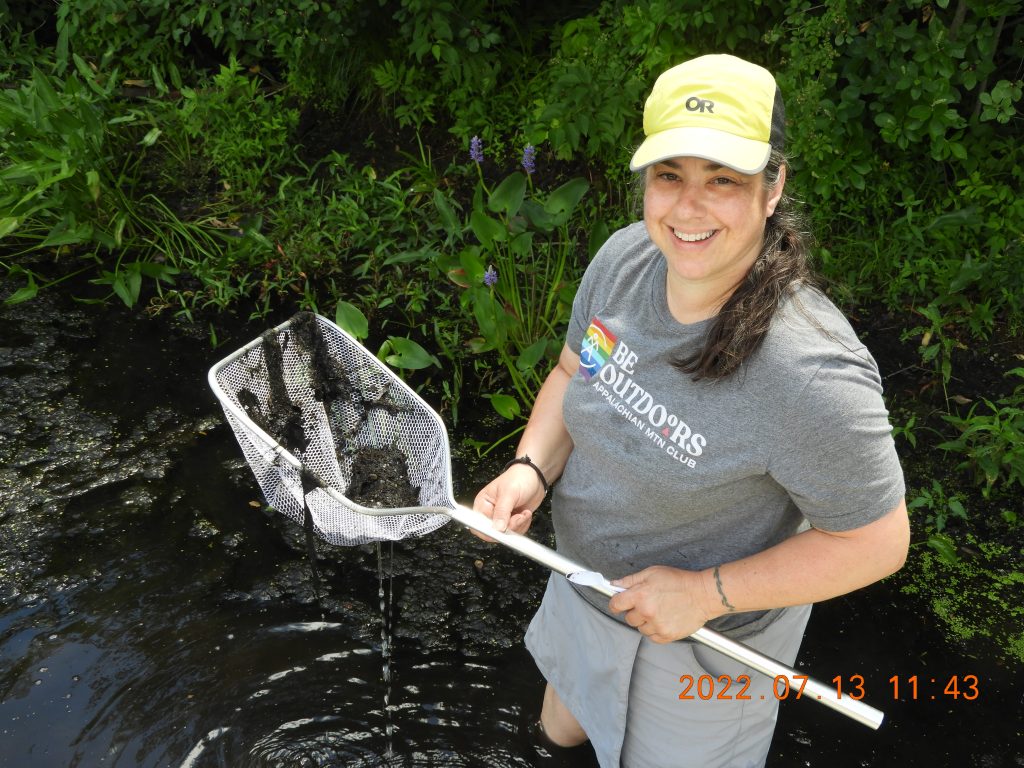
The goal of the Merrimack Dragonfly Mercury Project (Merrimack-DMP) is to gather data on mercury levels in the Merrimack River Watershed and inspire local students to think about their communities in new ways. Led by the AMC Research Team, with Dartmouth College and local partners Lowell Parks & Conservation Trust, Tsongas Industrial History Center, Lowell National Historical Park, and six schools in Lowell, Lawrence, and Manchester (NH), the project is part of the national-scale DMP coordinated by the National Park Service and US Geological Survey. Since 2021, over 1,000 youth and volunteers and 11 community groups in the Merrimack watershed have participated; they are practicing real-world science skills and using the dragonfly mercury data to explain to their community, family, and decision-makers how mercury could be an environmental health issue where they live. I lead the project in White Mountain National Forest – and some of the lakes and streams in the Forest are part of the headwaters of the Merrimack! So we are sampling from mountaintops to the ocean across this 5,000 square mile watershed.

Dr. Hannah Clipp, GIS Scientist
In mid-June, I started working for AMC as the new GIS Scientist, taking over for Cathy Poppenwimer (who retired after 26 years with AMC!). One of the first GIS projects that I tackled was Protect the View, a science-based campaign and call to action focused on preserving scenic trail experiences in and around Philadelphia, PA. I completed an updated analysis of protected lands in Protect the View focus areas, quantifying changes that have occurred since the campaign first launched in 2019. To sum up the results, I created infographics that display the amount of land parcels and acres that are developed, protected, or still need to be protected. Together with Kaitlyn Sorensen, AMC’s Mid-Atlantic Conservation Policy Manager, I hosted a webinar to share the results of the updated analysis with a great audience of trail network partners and interested stakeholders.
Although I have not yet had the chance to conduct research out in the field this summer, I did secure a loan of camera traps from Snapshot USA to participate in their 2025 field season, and I am helping to lead a concurrent camera trap study as part of the AMC Maine Woods Initiative. Stay tuned for some of the preliminary results this winter!
Honoring Cathy Poppenwimer
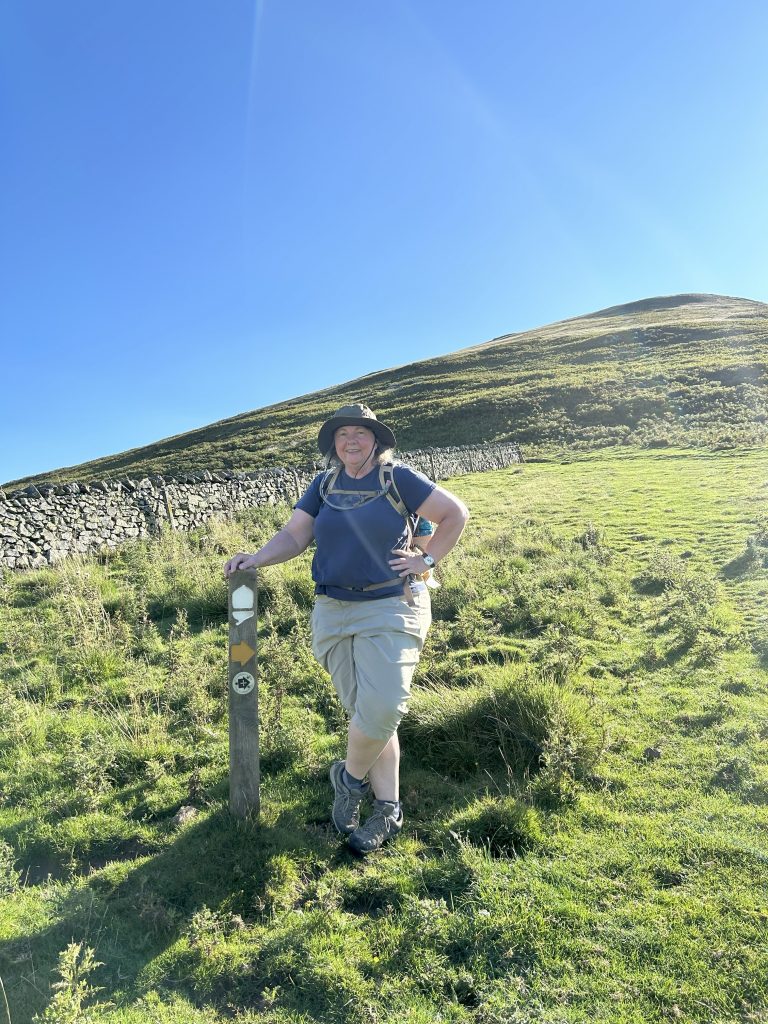
This summer, Research Team member Cathy Poppenwimer retired after 26 years of creating and analyzing maps and data that helped to define our understanding of conservation across AMC’s region. Cathy worked with AMC’s Mid-Atlantic team to assess where we can best prioritize conservation to preserve important ecosystems, trail views, and trail access for all. She recently led work at MWI to map the many streams that we are working hard to reconnect for fish passage. A field biologist by training, Cathy worked alongside team members to pitch in on fieldwork from MWI to the White Mountains to the Pennsylvania Highlands. She left an indelible mark on protecting ecosystems, trails, and landscapes and made our work visible through the many, many maps and interactive resources she created. Peruse our storymaps and interactive maps to see many of the products Cathy had a hand in producing!
Research relies on funding and collaboration. We thank all of the funders and donors, partners, as well as AMC staff, volunteers, and community scientists for making this work possible.
Get Involved with AMC Conservation