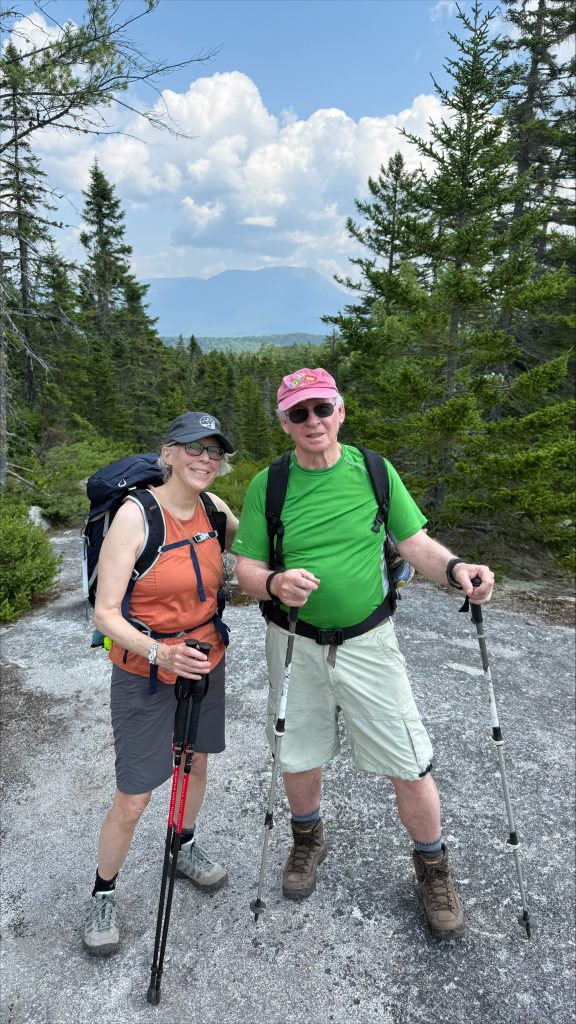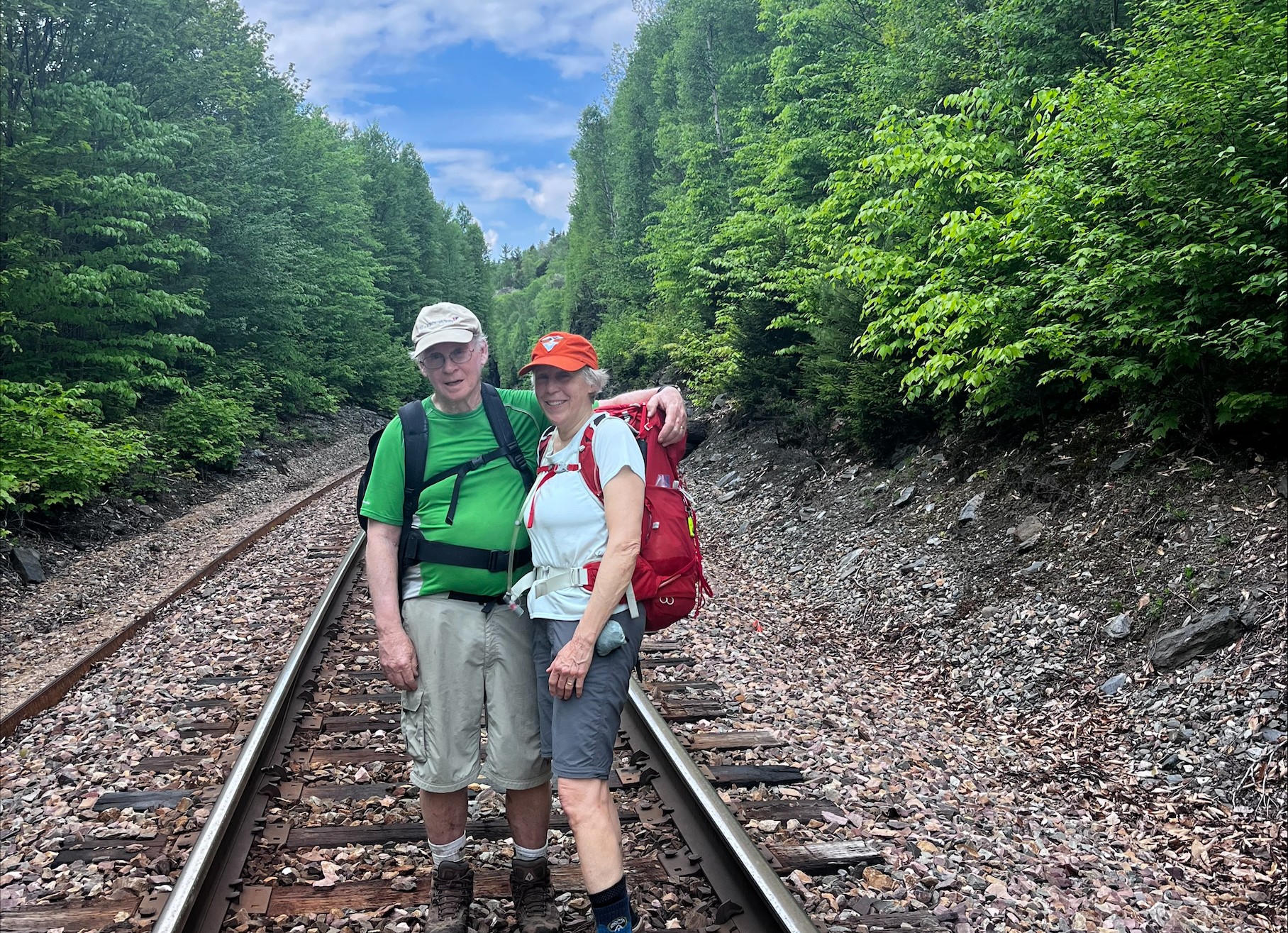
Perhaps the most iconic stretch of the Appalachian Trail is the 100 Mile Wilderness in Maine, where resupply is not easily available to the thru hiker. As an experiment, I wanted to explore whether someone in the last quarter century of their life could possibly section-hike this portion of the A.T. without having to spend a night in the woods. Lest the purists go apoplectic, I wish to point out that I served as an Army infantry officer during the Vietnam War, and I have spent many nights in the bush with an M-16 rifle tied to my belt with a shoelace. When I was younger and healthier, I paid my dues. As they say, hike your own hike.
Most thru hikers view the 100 Mile Wilderness as an obstacle to overcome. They want to get it behind them as quickly as possible and blast through in as few as five days. Northbound hikers think of it as the last major obstacle before the climb up Katahdin and the finish. Southbound hikers, having just started, do not wish to dwell here long as they want to get into the main body of the trail. However, slackpacking—a style of long-distance hiking where gear is sent ahead and hikers carry light backpacks—provides a different perspective: that this portion of the A.T. is something to be enjoyed, and possibly even savored.
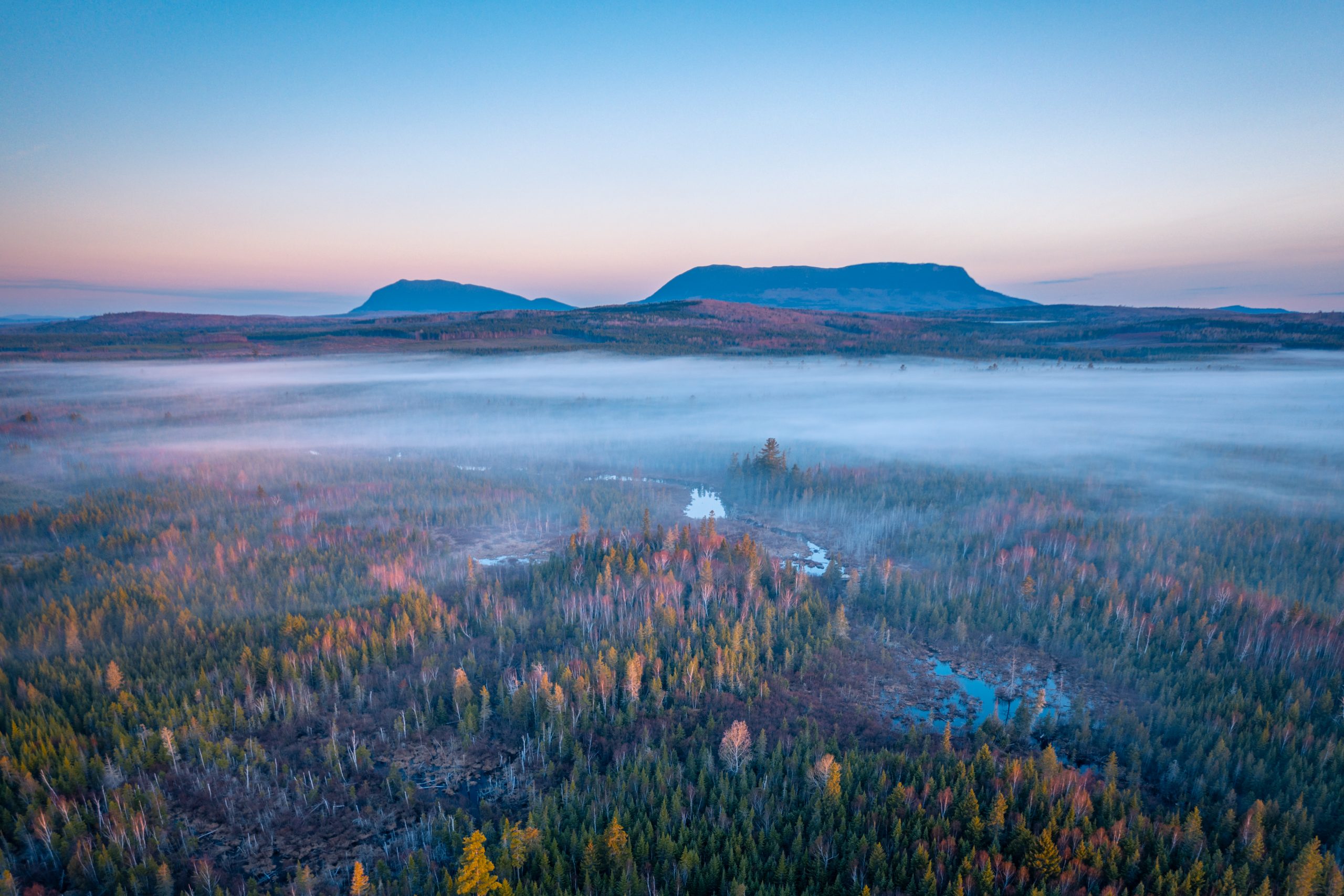
The 100 Mile Wilderness is mostly located within the Appalachian Mountain Club’s Maine Woods Initiative. This project protects the only major intact boreal forest in the United States. The ponds and lakes along the trail contain 95% of the native brook trout in America. Its remoteness is unique, and a hiking trail like this exists nowhere else in this country. In this writer’s opinion, the 100 Mile Wilderness should be on the UNESCO World Heritage Site list.
Having been involved with AMC for many years, during my hike I also wanted to demonstrate that use of the three AMC Maine Lodges nearby—Little Lyford, Gorman Chairback, and Medawisla—can be enormously useful to the A.T. slackpacker, providing showers, warm dinners and breakfast, and comfortable beds at night. In fact, before being rerouted, the A.T. went very close to Little Lyford and right through the Gorman Chairback facility. AMC staff provided advice, encouragement, and excellent assistance while I was conducting my slackpacking experiment. It could not have been done without their support, and the significant help, guidance, and meaningful assistance from my wife and experienced hiker, Marty Wallace, who did every mile that I did.
We began the journey on Route 11 just north of Monson in May of 2024. The several stream crossings were difficult but not impossible. We had staged a car at the trailhead parking lot about eleven miles north. Having to hike an additional 1.4 miles from the AT to the Little Wilson Falls Trail parking lot revealed a downside to the plan. Camping just off the trail would have avoided these additional empty miles for an already exhausted traveler, but we were staying at a lodge. Having to do those empty miles again the next day was equally painful.
Interestingly, after hiking northbound on day one, we hiked about the same distance, southbound on day two back from the same parking lot. Perhaps this was indicative of the irony of slackpacking in that after only two days we had already reversed direction to fill in the miles, which in A.T. parlance is known as flip-flopping.
However, an advantage of slackpacking the 100 Mile Wilderness soon became apparent. Not all of the hikes needed to be exhausting for a 76-year-old, nor did they all require staging a car at the end of the trip. We were able to find a short in-and-out trip of two-and-a-half miles, resulting in a pleasant five-mile round trip off the Jo Mary Road to the Cooper River Bridge near Mud Pond, where we had ended an earlier hike. There was another short trip of four miles from the parking area off Wadleigh Pond Road along Crescent Pond and the magnificent Pollywog Gorge, returning by rejoining Wadleigh Pond Road and walking back to the car. For these short trips, we stayed at AMC’s Little Lyford Lodge several nights, which, while not the most convenient to those hikes but it was the only lodge open at that time of the year. Needless to say, the wonderful food, showers, hospitality, and warm beds were much appreciated in otherwise cold and rainy conditions.
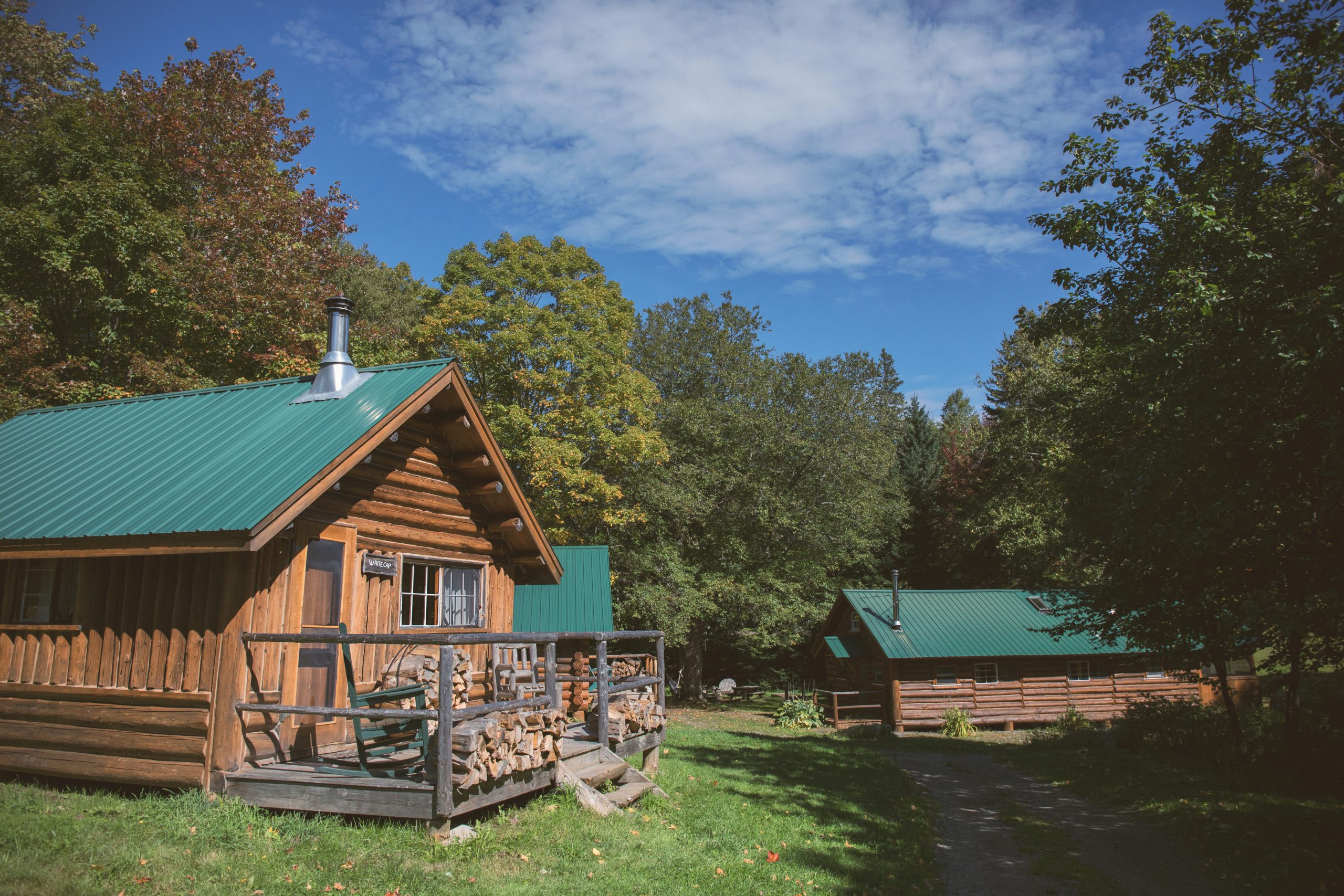
The 100 Mile Wilderness is intercepted by two gated dirt roads that require check in—the KI Road and the Jo-Mary Road. These well-maintained gravel roads allow excellent access to the middle portion of this part of the A.T. and play a key role in slackpacking, section hiking, and flip-flopping. The issue of access to the A.T. on the south side of Rainbow Lake required some creativity, as the distance from Wadleigh Pond Road to the Abol Bridge, the northern terminus of the 100 Mile Wilderness, is about eighteen miles with no intersecting roads. This distance exceeded the outer limits of what I could reasonably do in a single day. The solution was to divide the trip in half and use a float plane to fly us from a dock at AMC’s Medawisla facility to a small beach on Rainbow Lake and bushwhack to the A.T.
While hiking these sections of the A.T., I was surprised by how many hikers that we met were, like us, hiking only the 100 Mile Wilderness. They viewed this portion of the A.T. as a concise and separate challenge in and of itself. I was equally impressed when I encountered a woman who was doing the 100 Mile Wilderness without wearing shoes—only socks.
Another memorable experience occurred on the trail while descending from Little Boardman Mountain to Johnson Pond Road. Approaching the location where we had staged our car, my wife and I decided to give our extra food to thru hikers. We asked two hikers with the trail names Pigeon and Dragon—most A.T. thru hikers end up with a colorful name by the end of their journey—if they would like leftover ham sandwiches, since we were ending our trip and didn’t need them. I explained that they contained mayonnaise and should be eaten soon, as it was quite hot. They consumed the sandwiches right away on the trail. We gave them “trail magic”; it was a gratifying experience.