home
wild things
caption Moose can be seen at AMC's Little Lyford Lodge and Cabins. Photo by Jerry and Marcy Monkman.
AMC Outdoors, March 2008
Where the Wild Things Are

A guide to discovering what's flying, creeping or wiggling near you

By Bryan Pfeiffer

It turns out bull moose don’t have moose breath after all. At least this one didn’t. We met one autumn during a rainstorm on the Appalachian Trail, a few miles from Maine’s Saddleback Mountain. I was hiking south, contemplating the rainwater flooding my boots. The moose was trotting north, contemplating, well, I have no idea what, but it probably had something to do with a female moose. In any event, we simultaneously turned a corner in the path and nearly collided. He issued a steamy grunt, whirled, and galloped about 40 yards down the trail before vanishing into the spruce and fir. I nearly wet my pants.

Our best encounters with wildlife are often accidental, little more than a convergence of a nice place and dumb luck. But add to your outdoor adventures a bit of wisdom and planning, even a heightened sense of yourself outside, and your wildlife encounters will advance beyond bumping into a bird or a moose now and then. Whether you are backpacking or on your customary neighborhood walk with the kids, here is a basic guide to watching more of the wild around us, an opportunity to discover what flies, flutters, darts, jumps, scampers, walks, crawls, slithers, swims, or even just sits there beside life’s long, green path.

Distance, Dress, and Disposition
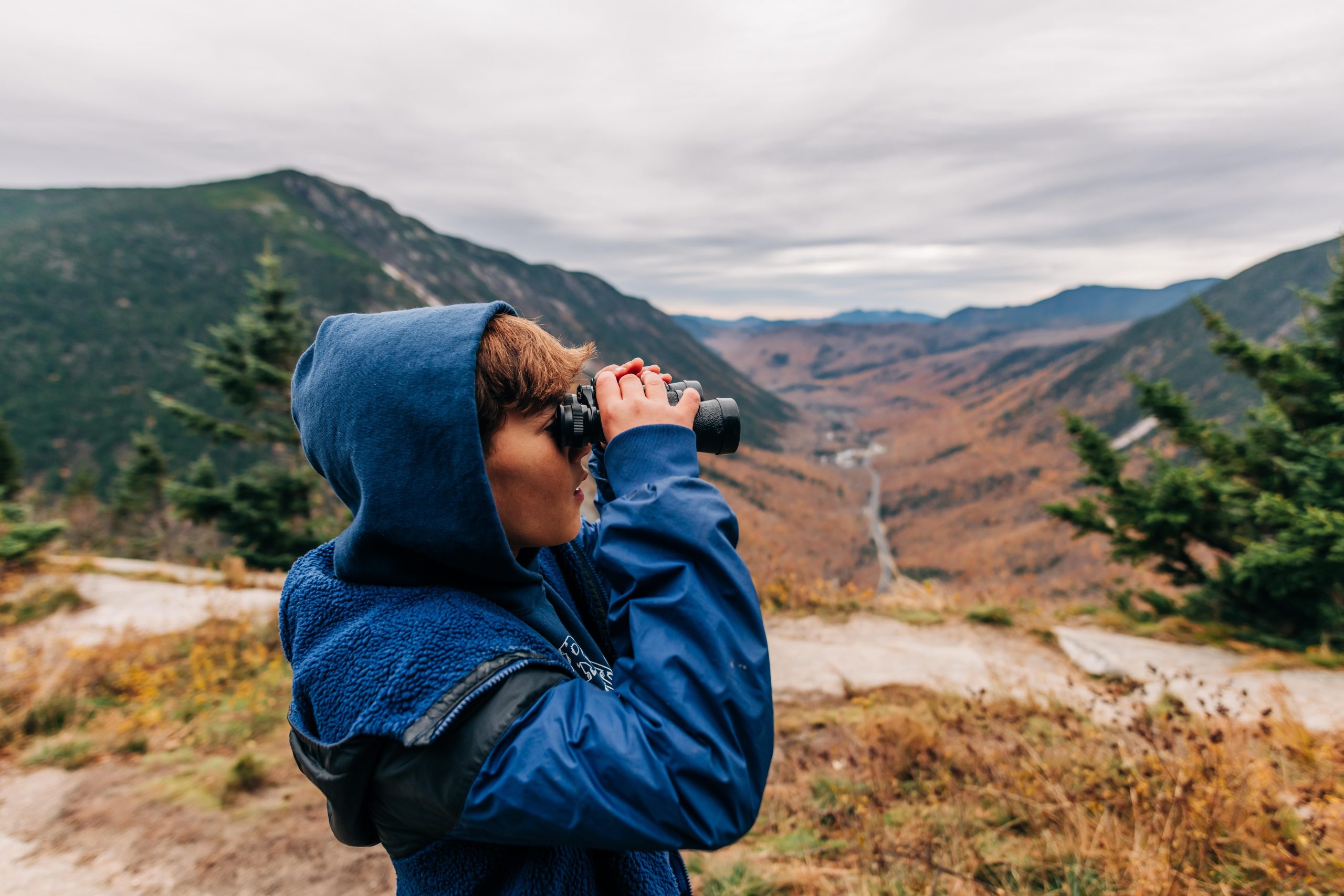
First do no harm. Our goal is to watch–not to participate. It begins with maintaining a respectful distance. And keeping it respectful depends on what you are watching. Take courtship and breeding, for example, which present abundant wildlife watching opportunities. I tactfully approach to within inches of the Northeast’s rarest butterflies and dragonflies while they are mating (and almost certainly distracted) and to within a few feet of amphibians during their vernal adventures. Birds demand more distance, of course, no matter what they are doing, which is why we have binoculars. And it is a bad idea to approach moose, particularly during their fall mating season. “Most people know when they’ve crossed the line from watching into harassing,” says Nicky Pizzo, senior interpretive naturalist at AMC’s Pinkham Notch Visitor Center in New Hampshire’s Presidential Range. “Most animals tend to give you signs that they’ve had enough.”

Your own appearance and demeanor also matter. White T-shirts and bright colors are fashion violations. The well-dressed wildlife watcher wears muted greens, tans and browns, even camouflage. And please slow down and stop now and then. Skilled wildlife watchers have a particular way of being outside, an acute sense of themselves: it is calm yet alert, with a soft, quiet step, a critical ease of movement. Nothing is more effective at scaring away birds, insects, and other wildlife than sudden motion, even a quick lift of your binoculars. While joining in the search for ivory-billed woodpeckers in Arkansas swampland two years ago, dressed head-to-toe in camouflage, I would often stop during each full day of walking and paddling to sit quietly for an hour or two against a large oak or bald cypress. Winter wrens and orange-crowned warblers would flutter to within a few feet; white-tailed deer and opossums would wander by unaware.

An array of toys and tools can aid the wildlife watcher. Binoculars that magnify seven or eight times (7x or 8x) are best. Make sure they can focus on objects as close as five or six feet for watching insects nearby. Spend as much as you can afford. And unless you absolutely must conserve weight and space, avoid compact models, which generally offer reduced performance and are hard to use while wearing gloves. And do not forget the small stuff. A 10-power hand lens, or loupe, will allow you to discover a kingdom of little things, from flowers to insects. Spend a lifetime exploring the woods with a hand lens and you will learn but a fraction of its natural secrets. Similarly, plastic jars with magnifying-glass lids and butterfly nets make insects more accessible to kids (and to the kid within us). And, finally, field guides are available these days for most any watchable organism.


1 | 2 | 3 NEXT PAGE next page
Bookmark and Share