Home Sweet DomeBuilding snow caves can be child's play By Kristen Laine AMC Outdoors, January 2010
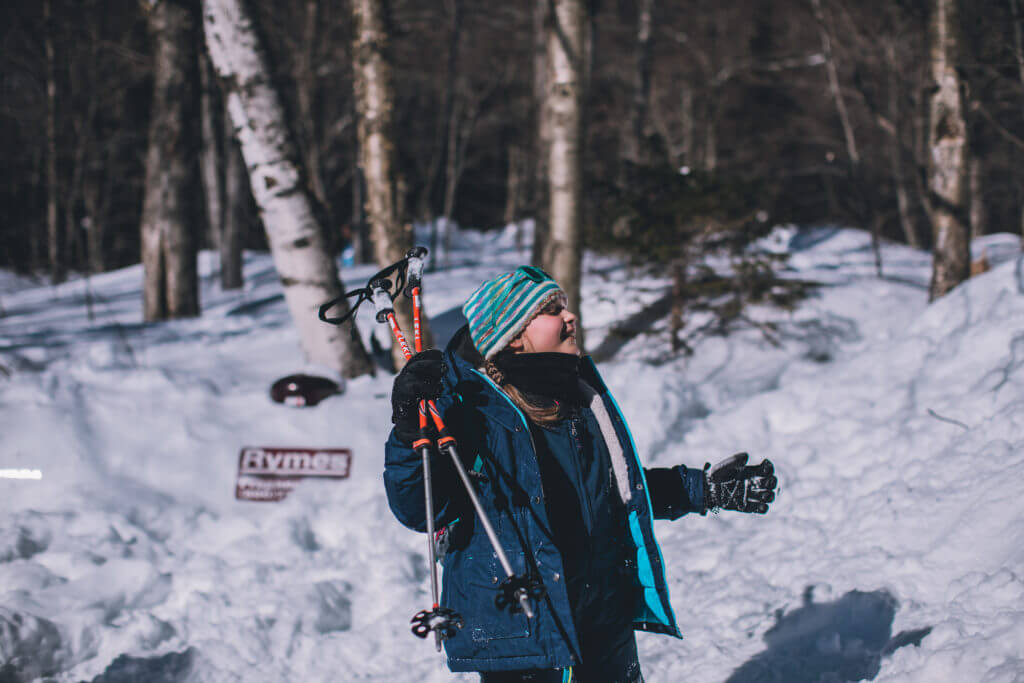
Last winter, as part of a family ski weekend in Maine, Lucas St. Clair, his wife, Yemaya Maurer, and assorted siblings built a snow cave for six. They picked a flat open spot protected from the wind on one side and with a view over a wilderness lake on the other. Starting early on a winter afternoon, the group piled snow high and packed it down. They drank hot chocolate while the snow dome hardened. Several hours of sweaty digging out later, their sleeping quarters were ready. The group spent a warm night under the snow, and although they skied out the next day, the structure they created could have housed them many more nights — and, at a constant temperature right around freezing, in relative winter comfort. St. Clair and Maurer were well qualified to lead that family construction project. Outdoor leadership instructors, they’re the co-authors of The AMC Guide to Winter Hiking and Camping. St. Clair and Maurer know that snow is a paradoxically wonderful building material, as children seem to understand intuitively:Snow can be hard or soft, is easily molded yet sturdy, and, though the product of cold, can be a surprisingly good insulator. Children and families can create snow structures as close to home as the backyard or on winter getaways. Whether it’s a simple two-sided snow fort or the domed cave that St. Clair and Maurer and their relatives built, all you need to become your own snow builder are a few simple steps, a handful of household tools, and some basic safety guidelines. Before building a snow cave, children need to be able to follow these safety guidelines:
St. Clair and Maurer called their snow cave a quinzhee, after the Athabascan word for the traditional winter dwelling built by native people of the far north. Athabascans created quinzhees by piling up great cones of snow and then hollowing them out. To create their quinzhee, St. Clair and Maurer piled snow about five feet high and a little wider than it was tall. Their group compacted the snow by stomping on it with their skis; snowshoes also work well, as does laying a board over the pile and standing on that. Before starting to dig it out, let the mound sit for at least 2 hours — or even for a day if the snow is light and dry.
Snow offers children opportunities to build the playscapes of their imagination — and adults the chance to be a kid all over again. A well-built snow fort or snow cave can be shelter for a night — or fun for a whole winter. |
||||||
![]() |


LEARN MORE...